Racing Against Silence: How American Museums Are Becoming the Last Guardians of Vanishing Japanese Craft Mastery
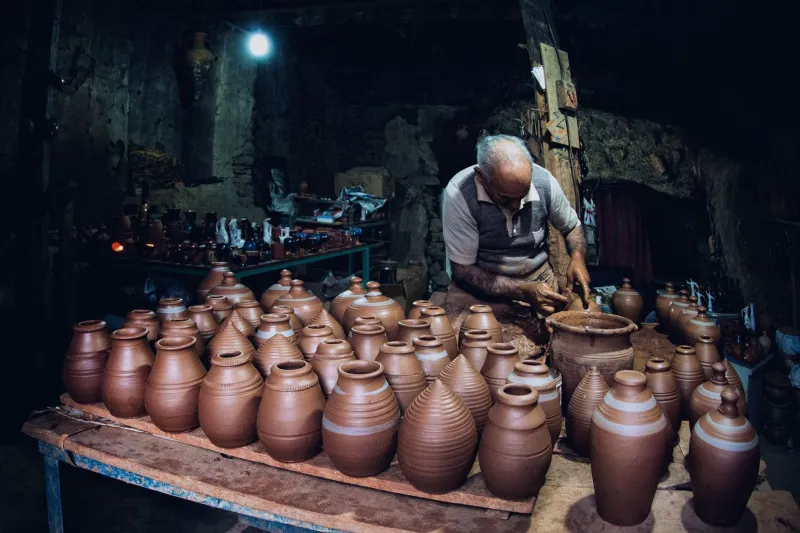
In a modest workshop outside Kyoto, a lacquerware master in his mid-eighties applies a final coat of urushi to a ceremonial bowl. His brush moves in a single, unbroken arc — a gesture refined across six decades of daily practice. No manual prescribes that arc. No apprentice currently stands beside him to absorb it. And in institutions thousands of miles away, in cities like Boston, Los Angeles, and New York, curators and archivists are watching the clock.
The urgency animating Japan's traditional craft world is not new, but it has sharpened considerably in the past decade. Demographic shifts within Japan — an aging population, shrinking rural communities, and diminishing interest among younger generations in entering trades that demand years of low-wage apprenticeship — have placed dozens of craft disciplines under quiet but serious threat. What is newer, and perhaps surprising, is where some of the most determined preservation efforts are now originating: not in Tokyo or Osaka, but in American cultural institutions with deep collections of Japanese art and a growing awareness that the living knowledge behind those collections may not survive another generation.
What Is Lost When a Master Stops Working
To understand what is at stake, it helps to understand what traditional Japanese craft knowledge actually is — and what it is not. It is not, primarily, a set of instructions. Generations of Japanese craft educators have distinguished between kata, the transmissible forms and sequences of a discipline, and the subtler, harder-to-name quality of embodied mastery that animates those forms. A weaver can describe the tension she applies to a silk thread. She cannot easily describe the way her fingertips read that tension, or the micro-adjustments her wrists make in response to humidity, fiber age, and the particular character of a given loom.
This is the knowledge that archivists at institutions such as the Museum of Fine Arts, Boston, and the Los Angeles County Museum of Art have been working to capture — with increasing urgency and increasing methodological creativity. Standard photography and written documentation, long the tools of curatorial preservation, are now supplemented by high-resolution video, motion-capture technology, and extended residency programs that bring master craftspeople into direct contact with American researchers over sustained periods.
"We are not simply recording a finished object," explained one senior curator involved in a recent textile preservation initiative. "We are trying to document a process, and behind the process, a way of perceiving. That is a much harder thing to hold in an archive."
The Institutions Leading the Effort
Several American museums have moved beyond passive collection into active stewardship over the past several years. The Freer Gallery of Art in Washington, D.C., has expanded its oral history program to include extended interviews with artisans working in ceramics, metalwork, and dyeing traditions. The Japan Society in New York has hosted a series of residency programs pairing aging masters with younger American craft practitioners — not to transfer the tradition wholesale, but to create a living record of its principles through dialogue and demonstration.
At the university level, programs at institutions including the University of Michigan and the Rhode Island School of Design have begun incorporating field documentation into graduate curricula, sending students to Japan specifically to observe and record working craftspeople in their own environments. The results — video archives, annotated sketchbooks, detailed process journals — are being deposited in institutional collections where they will remain accessible to future researchers.
Perhaps the most ambitious effort currently underway is a multi-institution collaborative project focused on Nishijin-ori, the intricate silk weaving tradition centered in Kyoto's Nishijin district. With the number of active Nishijin weavers having declined by more than eighty percent over the past four decades, a consortium including American and Japanese partners has been working to document not only weaving techniques but the full ecosystem of related skills — thread preparation, loom maintenance, pattern design — that the finished fabric depends upon.
The Challenge of Translation
Documentation, however thorough, encounters a fundamental limit. Craft knowledge is, by its nature, relational and contextual. It is transmitted through proximity, through correction, through the slow accumulation of failure and adjustment that only direct mentorship can provide. Archivists and curators engaged in preservation work are candid about this boundary.
"There is a version of this knowledge that we can save," acknowledged one researcher who has spent the past three years documenting urushi lacquerware techniques in Wajima. "There is another version that can only be saved by someone actually practicing it, being corrected by a master, over years. Those are two different things, and we should not confuse them."
This distinction has led some institutions to invest not only in documentation but in active transmission — supporting apprenticeship programs, funding extended study periods for American craftspeople in Japan, and in some cases helping to finance the continuation of workshops that would otherwise close for lack of resources. The line between museum and patron, between archivist and advocate, is becoming productively blurred.
American Collectors as Unexpected Stewards
Beyond institutional walls, a quieter form of preservation is taking place among private American collectors. Individuals who have spent decades acquiring Japanese lacquerware, ceramics, or textiles have, in some cases, developed relationships with the craftspeople whose work they collect — relationships that have evolved into something closer to patronage. Several prominent collectors have funded the documentation of specific artisans' techniques, commissioned final works from masters on the verge of retirement, or helped connect aging craftspeople with younger practitioners willing to continue their lineages.
This is not an entirely comfortable dynamic. Questions of cultural ownership and stewardship are real and deserve honest engagement. Japanese cultural authorities, craft associations, and living artisans themselves hold legitimate perspectives on how their traditions should be preserved and by whom. The most thoughtful American institutions and collectors involved in preservation work are attentive to these concerns, framing their efforts as collaborative support rather than unilateral rescue.
"We are not saving Japanese culture for Japan," said one curator carefully. "We are trying to be useful partners in a preservation effort that Japan itself is also undertaking, in its own ways, on its own terms."
A Record That Must Be Made Now
The arithmetic of the situation allows little room for delay. A craftsperson who is eighty years old today began their apprenticeship in the early 1960s, absorbing techniques and sensibilities rooted in centuries of prior practice. If they retire or pass away without documentation, without a successor, without some form of transmission, that specific lineage of knowledge ends. Not the broad category of the craft — lacquerware will continue, kimono weaving will continue — but the particular inflection of it that one human being spent a lifetime developing.
It is this particularity that the best preservation work seeks to honor. Not the general shape of a tradition, but the irreducible specificity of one master's hands, one workshop's light, one life's worth of accumulated knowing. American museums, for all their distance from the ateliers of Kyoto or the kilns of Arita, have found themselves in a position to help hold some of that knowing — imperfectly, incompletely, but with genuine care.
The bowl with the unbroken arc of lacquer will eventually find its way into a collection. What the archivists hope to preserve is some echo of the hand that made it.