Carried Across the Ocean: How Japanese-American Communities Are Rebuilding Lost Regional Festivals from Memory and Archive
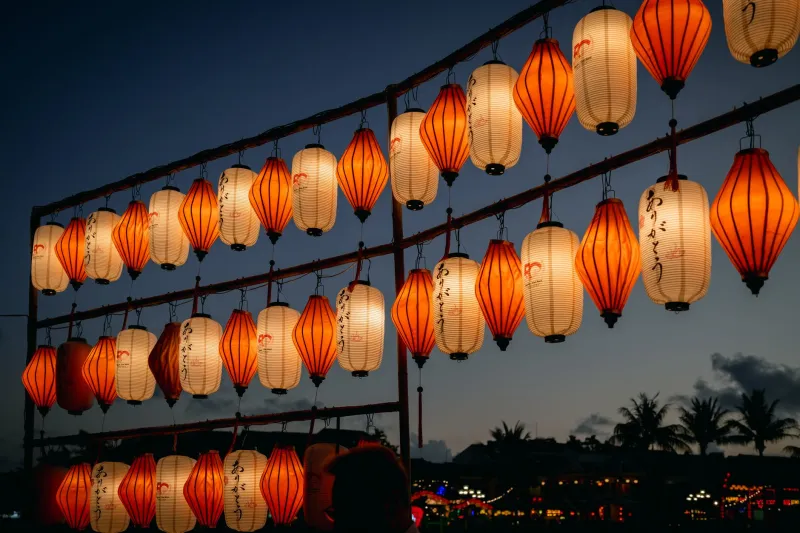
In a rented community hall in Fresno, California, a group of volunteers is arranging hand-painted paper lanterns in a configuration that has not been publicly displayed since the 1930s. The design—a stacked diamond pattern specific to a small fishing village on the Shimane coast—was reconstructed from a single black-and-white photograph discovered in a descendant's attic and cross-referenced against agricultural ministry records held in a university archive in Matsue. The organizer, a third-generation Japanese-American named Keiko Tanigawa, spent two years tracing the pattern before she felt confident enough to reproduce it. "We didn't want to approximate," she explains. "We wanted to get it right."
This level of devotion—meticulous, sometimes obsessive, always purposeful—is becoming increasingly familiar among Japanese-American communities engaged in what scholars of diaspora culture are calling "heritage reconstruction": the deliberate effort to revive not the broadly familiar festivals of mainstream Japanese culture, but the intensely local, often obscure matsuri traditions that once defined specific villages, valleys, and coastal towns. These are not the celebrated events that draw international tourism. They are the small, idiosyncratic ceremonies that marked a particular community's relationship with a particular mountain, river, or seasonal rhythm—and that, in many cases, exist nowhere in Japan anymore either.
What Is Lost When a Local Festival Disappears
Japan's postwar urbanization, combined with the devastation of rural depopulation in recent decades, has quietly extinguished thousands of hyper-local festival traditions. Ceremonies that once required an entire village to execute—specialized drum patterns, ritual dances performed only by families of a certain occupational lineage, decorative forms tied to local agricultural calendars—have in many cases simply ceased. The practitioners aged out. The young people left. The knowledge was never formally recorded.
For Japanese-American communities, this loss carries a particular ache. The ancestors who emigrated in the Meiji and Taisho eras often came from precisely these kinds of tight-knit rural communities. They carried memories of local festivals as part of their most intimate cultural identity. When those traditions vanished both in Japan and in the United States—interrupted first by the demands of immigrant life and then, catastrophically, by the forced incarceration of Japanese-Americans during World War II—the break was severe and, for many families, seemingly permanent.
What is emerging now, several generations later, is an effort to honor that rupture not by mourning it but by methodically working across it.
The Archival Turn
The research methods employed by today's matsuri revivalists would not be unfamiliar to academic historians. Organizers in Los Angeles, Seattle, San Jose, and Honolulu have formed informal research networks, pooling resources to access Japanese prefectural archives, digitized collections at institutions such as the Japanese American National Museum, and oral history projects conducted by universities on both sides of the Pacific.
In Seattle, a community group focused on preserving traditions from Yamaguchi Prefecture has been working with a retired ethnomusicologist to reconstruct the percussion arrangements of a harvest festival that was last performed in a small inland town in 1952. The group's leader, Haruto Nishimura, describes the process as "forensic, in a way. You're working from fragments—a melody someone's grandmother hummed, a description in a village chronicle, a photograph of musicians whose instrument positioning tells you something about the rhythm structure. You assemble what you can and you are honest about what remains uncertain."
That honesty is considered essential. Revivalists are careful to distinguish between elements that have been documented and verified, elements that have been plausibly reconstructed, and elements that represent educated creative decisions made in the spirit of the original. This transparency, far from diminishing the events, tends to deepen community investment in them.
Craft as the Carrier of Memory
Festival traditions are rarely just performances. They are ecosystems of craft. The lanterns must be made a specific way. The floats—where they exist—require particular joinery techniques. The costumes draw on textile traditions that may themselves be endangered. For revivalists, reconstructing a matsuri often means simultaneously reconstructing the material culture that supported it.
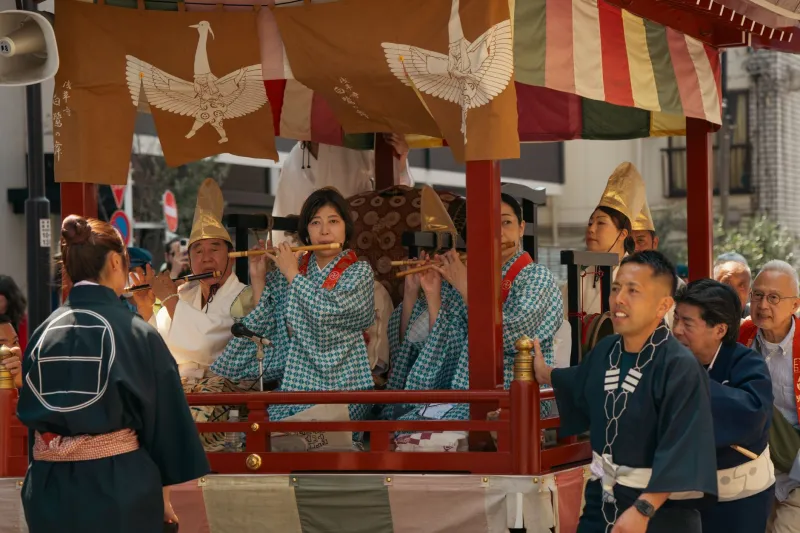
In San Jose, an annual effort to revive a Bon Odori variant from a specific district of Fukuoka has expanded into a yearlong craft program. Participants learn the dyeing techniques used for the festival's distinctive yukata pattern, work with a local woodworker to reproduce the drum stands used in the original ceremony, and study the calligraphic style used on the festival's traditional banners. The result is less a single event than a sustained community practice—one that keeps a constellation of related crafts alive alongside the festival itself.
"The festival is the occasion," says program coordinator Michiko Hayashi, "but the crafts are the substance. When you learn how to make the lantern, you understand something about the festival that you cannot get from watching it."
Intergenerational Architecture
Perhaps the most consistent observation made by organizers across the country is that these revival projects work best when they deliberately bridge generations. Elderly community members who retain fragmentary memories of original practices are treated as irreplaceable primary sources. Their recollections—however incomplete—provide texture and authenticity that no archive can fully supply.
At the same time, younger participants bring skills that the reconstruction process genuinely requires: facility with digital research tools, fluency in contemporary Japanese for communicating with counterparts in Japan, and the energy to manage the logistical complexity of staging a public event. The collaboration is not always frictionless, but it is consistently described as meaningful by those on both sides of it.
In Honolulu, where Japanese-American community infrastructure has been particularly robust since the nineteenth century, one organization has formalized this dynamic into a mentorship structure, pairing elderly issei descendants with high school and college students for a two-year matsuri apprenticeship. The program has produced not only successful festival revivals but several young people who have gone on to pursue graduate study in Japanese cultural history—a generational investment whose returns will compound over time.
What These Festivals Teach
There is a temptation to frame these revival efforts primarily as acts of cultural conservation—important, admirable, but essentially backward-looking. The people doing this work tend to resist that framing. What they describe, consistently, is an experience of discovery rather than mere recovery.
Rebuilding a regional matsuri tradition forces a community to ask questions it might otherwise never confront: What did our ancestors actually value? What did this specific place mean to them? What does it mean that this practice existed nowhere else—that it was ours, and not anyone else's? These are not questions with easy answers, but the process of asking them, together, turns out to be generative in ways that extend well beyond the festival itself.
For American communities navigating questions of identity, heritage, and belonging that are both deeply personal and broadly shared, the example of these matsuri revivalists offers something genuinely instructive. Cultural preservation, at its most serious, is not the maintenance of a museum exhibit. It is the active, imperfect, collaborative effort to carry something fragile across time—and to understand, in the carrying, what it was worth.