The Space Between: How Japanese Philosophies of Emptiness Are Reshaping American Homes, Minds, and Habits
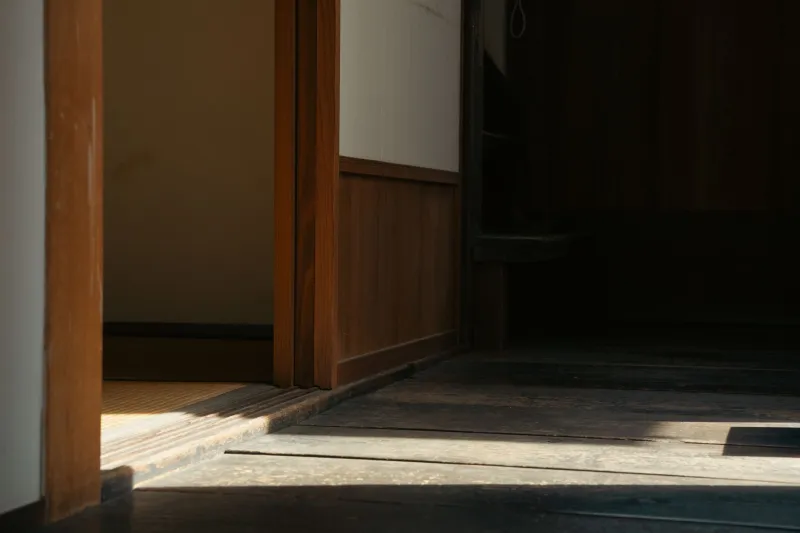
In a culture that prizes abundance — larger homes, fuller schedules, denser feeds — the Japanese concept of ma arrives as something almost subversive. Translated loosely as "negative space" or "the pause between," ma is not simply an absence. It is an active, breathing interval that gives surrounding elements their meaning. Alongside it stands yohaku no bi, often rendered as "the beauty of emptiness" or "the beauty of margin" — a principle deeply embedded in Japanese ink painting, garden design, and architectural philosophy.
Together, these ideas are quietly finding their way into American living rooms, meditation studios, and even software interfaces. The movement is not a trend so much as a reckoning — a collective exhale from people who have grown weary of maximalism and are searching, often without quite knowing it, for something that Japanese tradition has long understood.
What Ma Actually Means
The character for ma (間) is composed of a gate with moonlight filtering through it — an image that captures its essence better than any dictionary definition. It describes the charged interval between notes in music, the deliberate gap between structural beams in a traditional building, the silence at the end of a sentence that allows the words to settle.
For Japanese aesthetics, ma is not passive. It is generative. A room with fewer objects does not feel empty; it feels expansive. A garden with more stone than flower does not feel sparse; it invites contemplation. The restraint is the message.
This stands in direct contrast to the dominant aesthetic logic of American consumer culture, where space is something to be filled, silence is something to be avoided, and every surface is a potential canvas for more. The average American home contains, by some estimates, over 300,000 individual objects. The cognitive weight of that accumulation — what researchers increasingly call "visual noise" — is only now being seriously examined as a factor in stress, attention fatigue, and diminished wellbeing.
Interior Design and the Discipline of Less
Among American interior designers, interest in Japanese spatial philosophy has moved well beyond aesthetic borrowing. Practitioners who have engaged deeply with ma describe it as a discipline rather than a style — one that demands a fundamental shift in how clients understand their relationship to objects and space.
Rather than asking "What should I add?" the practice of ma begins with the question "What can be released?" A wall left unadorned is not neglected; it is given room to breathe. A table with a single ceramic vessel is not understated; it is precisely calibrated. The goal is not minimalism for its own sake but rather the creation of environments where presence — human, natural, and sensory — can be genuinely felt.
This approach draws heavily from the Japanese interior tradition of tokonoma, the recessed alcove found in formal reception rooms, which typically holds only one carefully chosen object or scroll. The tokonoma is not a display case. It is a focal point — a place where a single thing is honored with enough surrounding silence to be truly seen.
American designers who have studied this tradition often speak of the difficulty in convincing clients to trust the empty space. In a culture that equates fullness with success, bare walls can feel like failure. Yet those who make the commitment consistently report that their homes begin to feel less like storage and more like sanctuary.
The Meditative Dimension
Beyond the physical environment, ma has found a receptive audience in American contemplative and mindfulness communities. Meditation teachers who draw on Japanese Zen lineages have long incorporated the principle into their instruction — not merely as a metaphor but as a practical orientation toward experience.
In Zen sitting practice, the pauses between thoughts are not failures of concentration. They are, in fact, the whole point. The practitioner is not trying to achieve a particular mental state but rather to become intimate with the quality of awareness itself — the spacious, uncluttered ground from which all experience arises. This is ma at its most fundamental: the recognition that the interval is not empty but full of a different kind of presence.
For Americans navigating chronic distraction, the idea that stillness is not an absence of something valuable but rather the presence of something essential can be genuinely transformative. Wellness practitioners working at the intersection of Japanese contemplative tradition and modern stress science note that this reframing — from emptiness as lack to emptiness as resource — is often the most significant shift their clients make.
Yohaku No Bi and the Digital World
Perhaps the most unexpected territory where these principles are taking root is in digital design and technology wellness. Yohaku no bi — the beauty of the unwritten margin, the unpainted corner of the canvas — has begun to influence how some American UX designers and app developers think about screen space and user attention.
The dominant logic of digital product design has long been engagement maximization: fill every pixel, reduce every friction, ensure the user's eye is always drawn somewhere. The results are interfaces that feel relentless — and, increasingly, exhausting. A growing countermovement within the design community is questioning this logic, and some of its most thoughtful practitioners are looking to Japanese aesthetic tradition for an alternative grammar.
White space in digital design has always been understood as a functional tool. What yohaku no bi adds is a philosophical dimension: the idea that the unmarked space is not wasted but generous — that it offers the user's attention a place to rest, to orient, to choose. This is a fundamentally different relationship between designer and user, one rooted in respect rather than capture.
The Practice of Seeing Differently
What unites these various expressions — architectural, contemplative, digital — is a common perceptual shift. Engaging seriously with ma and yohaku no bi changes not just what one does with space but how one sees it. The interval, the margin, the pause begin to register as meaningful rather than incidental.
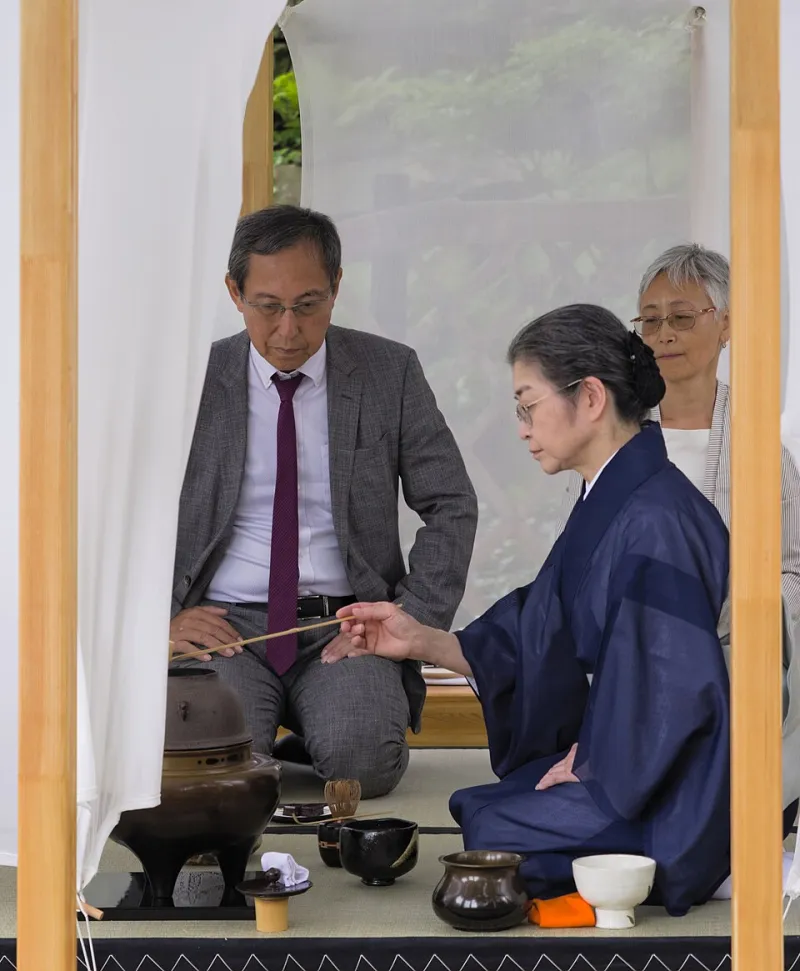
This is, at its core, a heritage practice. These concepts did not emerge from productivity culture or wellness marketing. They developed over centuries within Japanese artistic, architectural, and spiritual traditions — refined through the making of ink paintings, the construction of tea rooms, the composition of haiku, the arrangement of rock gardens. They carry within them a specific understanding of human attention and its relationship to the material world.
For Americans drawn to this tradition, the invitation is not to appropriate an aesthetic but to engage with a way of seeing that has been tested and refined across generations. The craftsmanship here is not in the object but in the perception — in learning, slowly and with discipline, to recognize that what surrounds a thing is inseparable from the thing itself.
In a moment defined by relentless addition, that may be the most countercultural skill of all.