The Way of the Blade: How Japanese Sword Arts Are Guiding American Practitioners Toward Inner Stillness
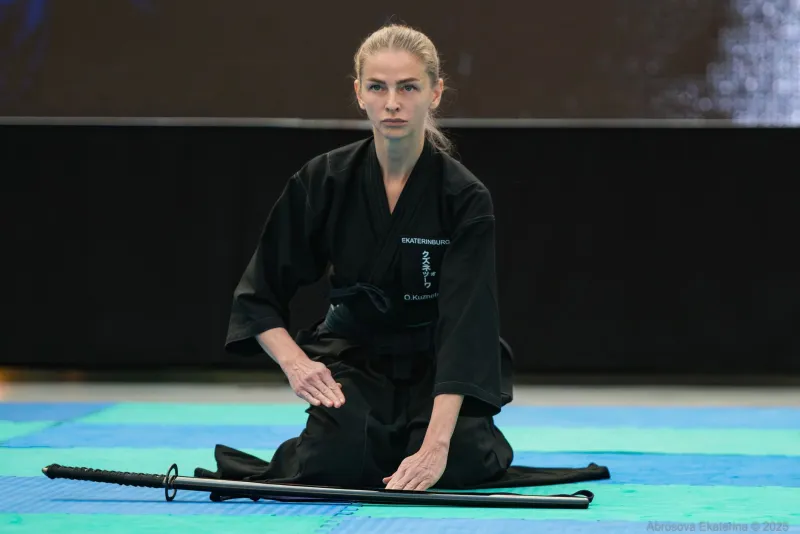
There is a moment, well known to any serious student of Japanese sword arts, when the technique ceases to be about the technique. The footwork is no longer consciously managed. The grip is no longer calculated. What remains is something far more difficult to name—a quality of presence, an unbroken attention that practitioners of kendo and iaido describe with quiet reverence. For a growing number of Americans who have entered the dojo seeking physical discipline, this moment arrives as a revelation.
Across the United States, from community recreation centers in Portland to purpose-built training halls in Chicago and New York, the practice of kendo and iaido is experiencing a quiet but meaningful renaissance. What distinguishes this wave of interest from earlier periods of martial arts enthusiasm is its orientation. Increasingly, American students are not arriving in search of combat proficiency. They are arriving in search of something harder to quantify—and finding that these centuries-old Japanese traditions offer precisely that.
Two Paths, One Principle
Kendo and iaido, while sharing a common lineage in Japanese swordsmanship, present distinct experiences to the practitioner. Kendo, practiced with bamboo shinai and protective armor, is dynamic and interpersonal—a living dialogue between two opponents that demands split-second responsiveness and sustained mental clarity under pressure. Iaido, by contrast, is a solitary discipline: the practitioner draws, cuts, and sheathes a sword in a series of precisely defined forms known as kata, performed in deliberate silence without a physical opponent.
Together, they articulate a philosophy that runs deep in Japanese martial culture. The concept of budo—the martial way—holds that physical training is inseparable from character development. Every strike, every draw, every moment of stillness before movement is understood as an opportunity to confront the self. This is not metaphor. It is the structural premise of the practice.
Sensei Haruki Tanaka, a seventh-degree practitioner who has taught in the San Francisco Bay Area for over two decades, describes the philosophical architecture of iaido to his American students with characteristic directness: "The sword has no opinion about who you are. It shows you exactly who you are."
The American Dojo and the Question of Adaptation
One of the more nuanced conversations happening within American kendo and iaido communities concerns the degree to which instruction should be adapted to meet contemporary Western students where they are. The question is not trivial. Japanese sword arts carry within them a complex inheritance of Zen Buddhist thought, Confucian ethics, and Shinto sensibility—a philosophical ecosystem that does not always translate cleanly into American cultural contexts.
Some instructors advocate for a conservative approach, maintaining Japanese-language terminology, traditional etiquette structures, and the full weight of historical context as non-negotiable foundations. Others have found that gently foregrounding the meditative and psychological dimensions of practice—drawing explicit connections to mindfulness frameworks already familiar to many American students—creates a more accessible entry point without diluting the tradition's essential character.
At the Denver Kendo Club, head instructor Margaret Osei-Bonsu has developed a curriculum that honors both imperatives. "We don't change the practice," she explains. "We change how we talk about it before the practice begins. Once students are on the floor, the tradition speaks for itself."
Her approach includes pre-class discussions that draw connections between the Japanese concept of mushin—often translated as "no-mind," a state of fluid, unattached awareness—and contemporary research on flow states and contemplative attention. Students who arrive familiar with meditation or yoga frequently recognize the territory being described, even if the vocabulary is new.
Stillness as the Heart of the Strike
Among the most commonly reported experiences of American kendo and iaido practitioners is a profound shift in their relationship to mental noise. The demands of both disciplines are such that ordinary discursive thinking—the planning, ruminating, and self-narrating that characterizes much of modern cognitive life—cannot survive sustained engagement with the sword.
In kendo, this is enforced by the immediacy of an opponent who will exploit any lapse in attention. In iaido, it is enforced by the unforgiving precision of kata, where a wandering mind produces visible, correctable error. In both cases, the practice functions as a rigorous training ground for a quality of attention that many American students describe as transformative far beyond the dojo walls.
"I came for the physical challenge," says Daniel Reyes, a software engineer in Austin who has practiced iaido for four years. "What I found was that I could not think my way through it. The moment I tried to control the outcome, everything fell apart. That lesson has changed how I work, how I parent, how I handle difficulty. I didn't expect any of that."
This testimony is not unusual. Across American dojo communities, students speak of sword practice reshaping their relationship to patience, failure, ego, and the passage of time in ways they had not anticipated.
Ceremony and the Cultivation of Respect
Beyond the psychological dimensions, many American practitioners find themselves drawn into the rich ceremonial culture that surrounds Japanese sword arts. The formal bow upon entering the dojo, the careful handling and maintenance of equipment, the hierarchical relationships between seniors and juniors—these structures, initially unfamiliar and occasionally uncomfortable for American students accustomed to more egalitarian social norms, frequently become sources of profound meaning over time.
The act of caring for one's sword—cleaning and oiling the blade after each use in iaido—is described by many practitioners as its own form of meditation. The attention required is exacting, and the ritual context imbues what might otherwise be simple maintenance with a quality of reverence.
"The sword is not a prop," says Instructor Tanaka. "When you care for it properly, you are practicing the same quality of attention that the kata demands. There is no separation."
A Living Tradition in American Hands
The growth of kendo and iaido in the United States is supported by a network of affiliated organizations, most notably the All United States Kendo Federation, which maintains connections to the All Japan Kendo Federation and helps ensure that American practice remains anchored to authentic Japanese tradition. This institutional grounding matters—it provides a structure within which American dojos can innovate in their pedagogy while maintaining fidelity to the discipline's foundational principles.
What is emerging, at its best, is something genuinely vital: a living transmission of Japanese philosophical and martial culture, adapted not by dilution but by deepened understanding. American students are bringing their own questions—about meaning, attention, identity, and the shape of a well-lived life—to a tradition that has been answering such questions, in its own way, for centuries.
The sword, it turns out, is patient. It has waited this long. It can wait for the student to become ready.