Attuned to the Earth: How Japanese Seasonal Consciousness Is Offering Americans a Path Through the Noise
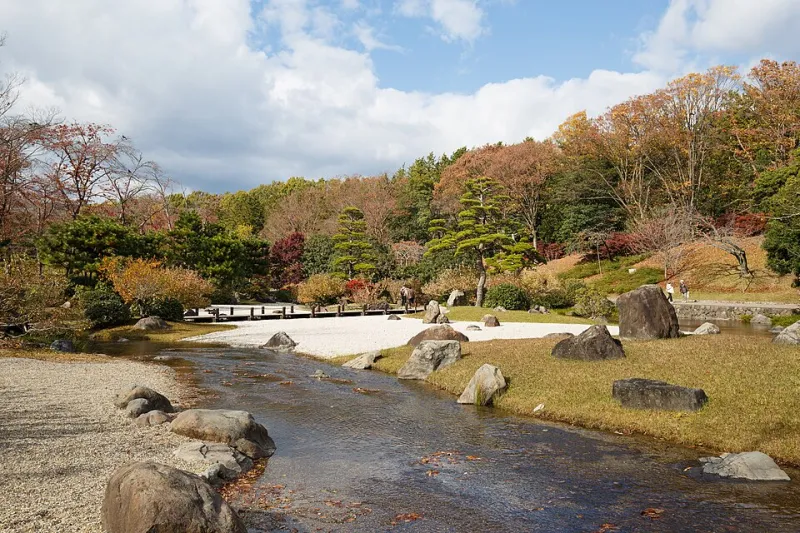
Photo: Laitche, CC BY-SA 4.0, via Wikimedia Commons
Somewhere between the first frost on a Minnesota windowpane and the precise moment a dogwood tree in Georgia drops its last petal, there is a quality of attention that most Americans have learned to ignore. The calendar tells us what season it is. Our phones remind us of the weather. But the subtler rhythms—the way afternoon light shifts in early September, the particular smell of soil after the first autumn rain—these are things we have largely stopped noticing.
In Japan, the practice of noticing them never stopped.
A Culture Built Around Seasonal Sensitivity
The Japanese concept of kisetsukan—often translated as "seasonal consciousness" or "a sense of the seasons"—is not a wellness trend or a lifestyle philosophy. It is a structuring principle woven into art, cuisine, architecture, ceremony, and daily language across more than a millennium of cultural practice.
At its most formal, this awareness manifests in kigo: seasonal reference words embedded in the tradition of haiku and other classical poetry. A kigo is not merely a description of weather. It is a compressed cultural symbol—a single word that carries within it an entire constellation of sensory, emotional, and aesthetic associations accumulated over centuries. The word kare-no (a withered field) does not simply indicate winter. It evokes a particular quality of desolation and quiet beauty that Japanese poets have refined and passed down through generations.
Beyond poetry, kisetsukan shapes the Japanese culinary tradition of shun—the practice of eating ingredients only at their peak seasonal moment—and the aesthetic principle of mono no aware, a bittersweet sensitivity to the transience of beautiful things. It informs the timing of tea ceremony, the arrangement of a garden, the selection of a kimono pattern. To be seasonally aware in the Japanese sense is not to glance at a calendar. It is to cultivate a finely tuned perceptual instrument.
Why Americans Are Paying Attention Now
The timing of American interest in these concepts is not difficult to explain. After years of living in algorithmically managed environments—where the same content streams regardless of the hour, the month, or the weather outside—a significant number of Americans report a growing sense of temporal disorientation. The seasons blur. The year compresses. Creativity stalls.
"I had stopped knowing what time of year it was in any meaningful sense," says Claire Yoshida, a graphic designer in Brooklyn who began incorporating seasonal awareness practices into her daily routine three years ago after reading about kisetsukan in a Japanese design journal. "I knew it was December because my inbox said 'holiday deadline.' But I couldn't tell you what December actually felt like. I had lost that."
Yoshida is not alone. Across the United States, wellness communities, creative professionals, educators, and contemplative practitioners are turning to Japanese seasonal traditions as a framework for reestablishing what many describe as a more grounded relationship with time. What they are finding is a tradition of remarkable depth and practical applicability.
The Haiku Path Into the Present
For many Americans, the entry point into Japanese seasonal consciousness is haiku—a poetic form so widely taught in American schools that it is often reduced to a syllable-counting exercise, stripped of the kigo that gives it meaning.
Reencountering haiku as a seasonal practice rather than a formal exercise has been, for some practitioners, genuinely transformative. In workshops offered through Japanese cultural organizations in cities including Seattle, Denver, and Boston, participants are invited to write haiku not as a literary exercise but as a form of perceptual training. The goal is not a polished poem. It is the quality of attention required to identify a true seasonal marker—something observed directly, not recalled or imagined.
"We ask people to go outside and find their kigo," explains Kenji Matsuda, a poet and educator who leads seasonal writing workshops in the Bay Area. "Not the kigo from a classical anthology—their own. What is the specific detail of this season, in this place, right now? That question is harder than it sounds for people who have spent years looking at screens instead of trees."
Matsuda, who trained in Japan under practitioners of classical haiku, is careful to distinguish between cultural borrowing and genuine engagement with tradition. The Japanese seasonal system, he notes, developed within a specific geographic and cultural context. American practitioners are not adopting Japanese seasons—they are learning a method of attention that they can apply to their own landscapes.
"The kigo system is not a list of correct images," he says. "It is a discipline of noticing. That discipline can be practiced anywhere."
Seasonal Consciousness in the Creative Workplace
Beyond individual wellness practice, some American organizations are experimenting with seasonal awareness as a framework for creative work and team culture. A small number of design studios, writing collectives, and educational institutions have begun structuring their annual rhythms around seasonal transitions rather than quarterly business cycles—scheduling periods of intensive output in alignment with the energy of late summer and early autumn, and deliberately building in quieter, more reflective periods in winter.
The idea draws on the Japanese concept of ma—the productive pause, the meaningful interval—and applies it at an organizational scale. Proponents argue that this approach reduces the creative exhaustion that accumulates when teams operate at uniform intensity year-round.
"Seasons exist whether we acknowledge them or not," observes Dr. Naomi Hara, a researcher at a Pacific Northwest university who studies the relationship between environmental attunement and creative productivity. "What the Japanese tradition offers is a set of tools for actually perceiving those seasons—for letting them inform how you work, what you make, and when you rest. That is not mysticism. It is a highly refined form of practical wisdom."
The Subtlety of the Practice
What distinguishes serious engagement with kisetsukan from seasonal décor or autumnal aesthetics is its insistence on subtlety. The Japanese seasonal calendar, in its most developed forms, divides the year into seventy-two ko—micro-seasons of approximately five days each, each named for a specific natural phenomenon: the day when the first thunder sounds, the week when bush warblers begin to sing, the brief interval when irises bloom beside still water.
This granularity is not ornamental. It is the product of generations of careful observation, codified into a cultural inheritance that asks its practitioners to pay attention at a resolution that ordinary life seldom demands.
For Americans accustomed to the broad strokes of four seasons—and to the further abstraction of those seasons by climate-controlled interiors and year-round produce—encountering this level of seasonal specificity can be genuinely disorienting. And then, practitioners report, it becomes something else entirely.
"The first time I noticed that the light was different—not just 'it's fall' but that specific low-angle light of mid-October in the late afternoon—I felt something shift," says Claire Yoshida. "I was present in a way I hadn't been in years. Not because of anything I had done, but because I had finally looked."
In that quality of looking—patient, specific, and unhurried—lies the enduring gift of Japan's seasonal tradition. It does not require a screen, a subscription, or a device. It requires only the willingness to step outside, take a breath, and attend to the world as it actually is.