Silence as Structure: How Japanese Compositional Philosophy Is Rescuing American Ears from the Age of Noise
There is a moment, familiar to anyone who has spent time in a crowded American city or scrolled through a feed of autoplay videos, when the accumulated weight of sound becomes something close to physical. Notifications, traffic, ambient music in every commercial space, the persistent hum of digital life — the sonic environment of contemporary America has grown so dense that many people have simply stopped noticing it. That numbness, researchers and musicians increasingly suggest, carries a cost.
In response, a quiet but meaningful movement is gathering momentum: Americans discovering the meditative architecture of Japanese minimalist music, and with it, the ancient compositional philosophies that give it shape.
The Concept at the Core
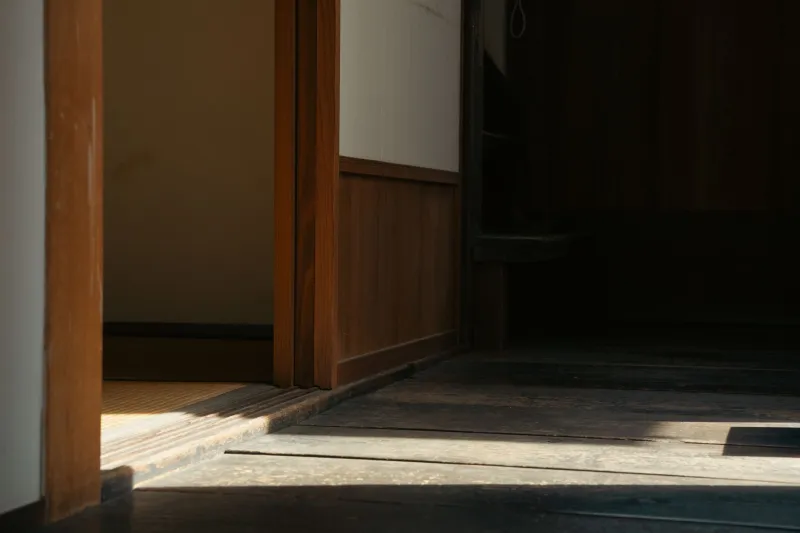
To understand what draws contemporary listeners to this tradition, one must first understand ma — a Japanese concept that resists clean translation but is most often rendered as "negative space" or "the pause between." In music, ma is not merely silence; it is silence understood as a structural element, as essential to the composition as any note. The space between sounds carries meaning, tension, resolution.
Closely related is yohaku no bi, sometimes translated as "the beauty of what is left incomplete" or "the aesthetic of empty margins." Borrowed from the visual arts — where a painting's unpainted space is considered as deliberate as its brushstrokes — this principle has long animated Japanese musical composition, from the austere intervals of gagaku court music to the restrained phrasing of shakuhachi flute.
These are not passive philosophies. They demand that the composer make a conscious, disciplined choice: to resist filling every available moment, to trust the listener to inhabit the space, to allow incompleteness its own eloquence.
American Musicians Finding a Different Grammar
For composers and producers working in the United States, these ideas have arrived at a culturally significant moment. American popular music — and much of its ambient and experimental counterpart — has historically favored density. Full frequency ranges, layered production, constant rhythmic momentum. Even genres marketed as "relaxing" often fill every second with something.
A growing cohort of American musicians is deliberately working against that grain. Composers in cities from Portland to Brooklyn have begun incorporating ma as an explicit structural principle, treating silence not as an absence to be anxious about but as a presence to be curated. Some have studied Japanese traditional music formally; others have arrived at these principles through deep listening to artists such as Tōru Takemitsu, whose orchestral works brought the aesthetics of ma into conversation with Western classical tradition, or through the sparse piano compositions of Ryuichi Sakamoto.
What they share is a willingness to let sound breathe — to write a phrase and then genuinely stop, allowing the room itself to become part of the composition.
"There's an assumption in American production that silence means something went wrong," one Brooklyn-based composer noted in a recent conversation about her practice. "But once you start hearing ma as intentional, as load-bearing, you can't unhear it. Every piece of music you've ever loved suddenly has more space in it than you realized."
Listeners Seeking Refuge
The audience for this approach extends well beyond musicians. Across the country, listeners are actively seeking out music that practices restraint — not as background noise, but as something closer to a discipline. Streaming playlists centered on sparse, interval-rich Japanese ambient and neo-classical compositions have accumulated devoted followings. Dedicated listening sessions, modeled loosely on the attentiveness cultivated in traditional Japanese aesthetic practices, have emerged in cities including Chicago, San Francisco, and Austin.
The appeal, many listeners report, is not simply relaxation. It is recalibration. Extended exposure to dense soundscapes — the norm of American digital life — appears to compress the perceptual range, training the nervous system to expect constant stimulation. Music built on ma and yohaku no bi seems to reverse that compression gradually, restoring sensitivity to subtlety.
"I didn't realize how much I'd stopped actually hearing things," one listener in Seattle described. "The first time I sat with a Takemitsu piece — really sat with it — I noticed sounds in the room I'd been filtering out for years. The refrigerator. My own breathing. It was unsettling at first, and then it was extraordinary."
A Heritage of Intentional Sound
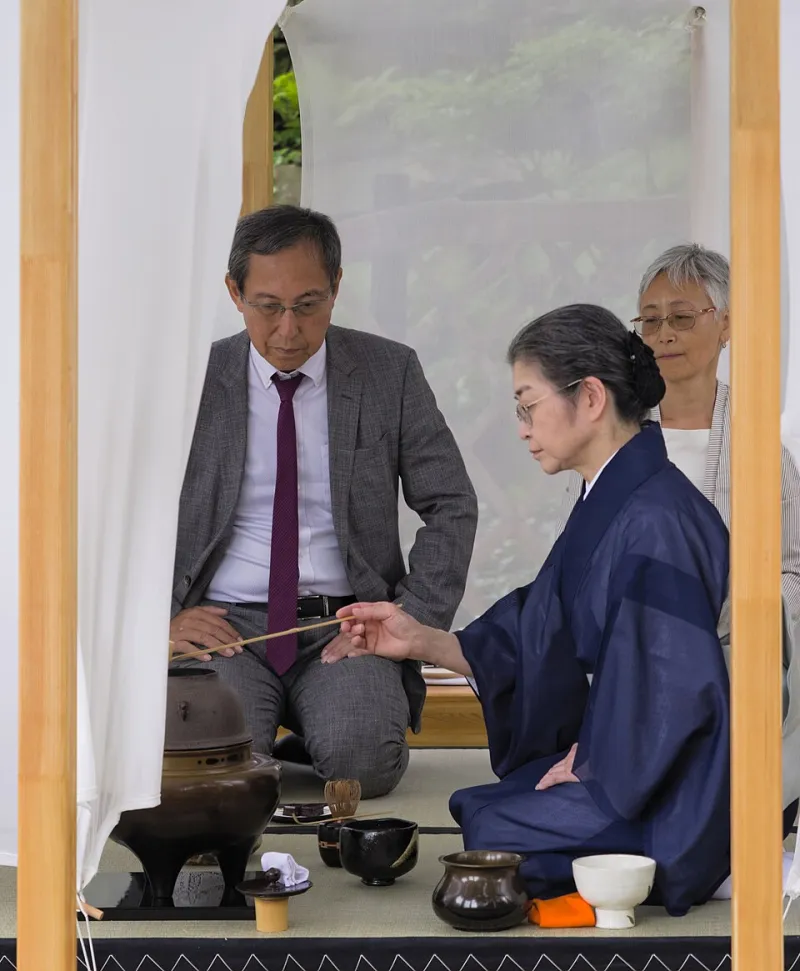
It is worth situating this contemporary movement within a longer tradition. Japanese music has never been monolithic, and not all of it is sparse. But the aesthetic values of ma and yohaku no bi run through a remarkable range of Japanese musical forms. The shakuhachi, a bamboo flute associated with Zen Buddhist practice, is perhaps the most direct embodiment: its tones are produced through a technique that incorporates breath noise and microtonal variation, and its repertoire is built around intervals of silence that feel inhabited rather than empty.
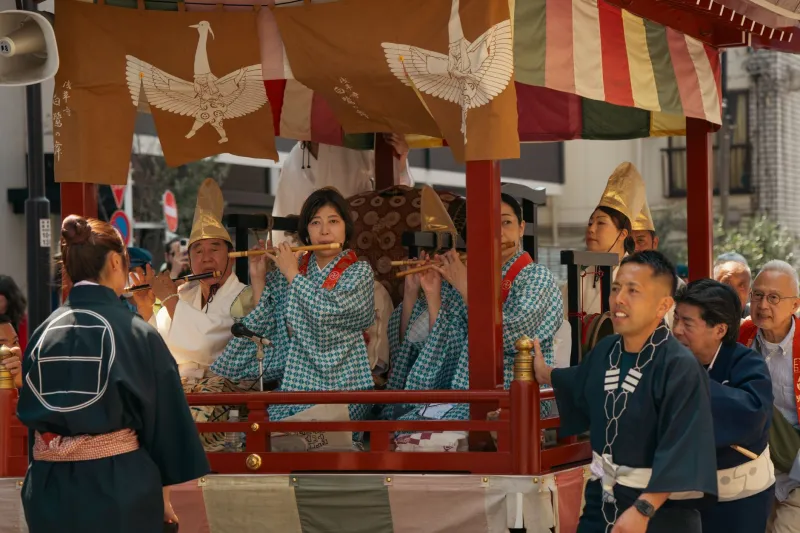
Gagaku, the ancient court music of Japan and one of the world's oldest continuously performed musical traditions, moves at a pace that initially confounds Western listeners accustomed to modern tempos. Its rhythms are glacial, its harmonics austere, its emotional register vast precisely because it refuses to hurry. To listen to gagaku with patience is to understand that restraint is not withholding — it is a form of generosity.
These traditions did not emerge as responses to sensory overload. They emerged from a broader cultural orientation toward attention, toward the value of what is not said, not played, not filled in. That they now speak so directly to the condition of American listeners in the digital age may be less a coincidence than a confirmation: the wisdom embedded in these forms was always about the relationship between sound and consciousness.
Practicing Restraint
For Americans interested in engaging more deeply with these traditions, the entry points are varied. Recordings of traditional shakuhachi and gagaku are widely available and reward attentive, unhurried listening. The works of Tōru Takemitsu offer a bridge between Japanese aesthetic philosophy and Western orchestral language. Contemporary Japanese composers working in ambient and minimalist idioms — many now easily accessible through major streaming platforms — carry these principles forward in forms that feel immediate and accessible.
Beyond passive listening, some practitioners have begun incorporating ma into their own creative work, regardless of genre. The principle is not proprietary to any tradition; it is available to anyone willing to make the disciplined choice to stop, to trust the pause, to allow the listener to meet the music halfway.
In an era when every surface of American life seems to compete for auditory attention, that willingness to be incomplete — to leave the margin empty and trust its beauty — may be among the most radical creative acts available. The Japanese compositional tradition did not invent silence. But it built a philosophy around its value, and that philosophy, crossing the Pacific in fragments and recordings and the practices of dedicated musicians, is finding Americans who are ready to listen.
Or perhaps more precisely: ready to hear.