Measured in Years, Not Hours: What Japanese Pottery Apprenticeships Are Teaching a New Generation of American Artisans
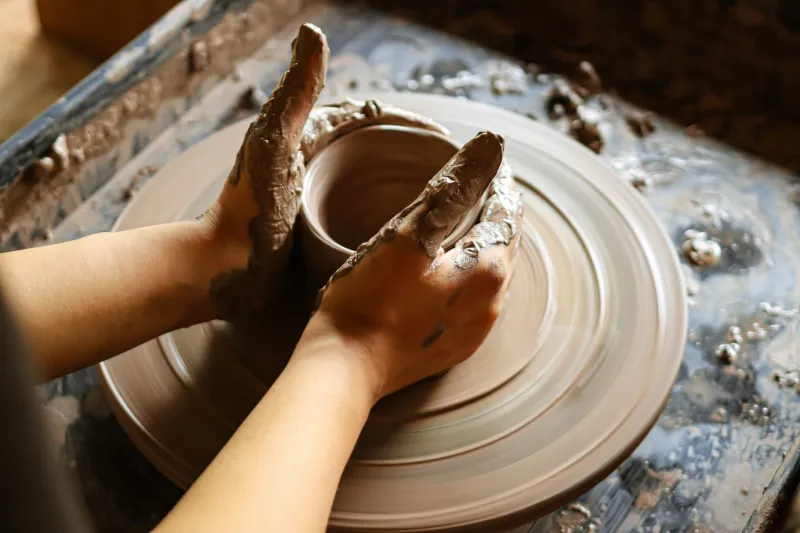
Somewhere in a workshop on the outskirts of Mashiko, a young woman from Portland, Oregon, is doing the same thing she has done every morning for the past two years: wedging clay. Not throwing it on a wheel. Not glazing or firing. Wedging — the rhythmic, meditative process of removing air pockets from raw clay before it can be shaped into anything at all. To her former colleagues in the American design industry, this might look like stagnation. To her master, it looks like a beginning.
This is the world of the Japanese pottery apprenticeship, a training tradition that has governed the transmission of ceramic knowledge for centuries. And increasingly, it is a world that American artisans are choosing to enter — not despite its demands, but because of them.
A Tradition Built on Patience
In Japan, the formal apprenticeship structure — known broadly as denshō, or the passing down of tradition — operates on timelines that would be nearly unrecognizable to most American craftspeople. A student might spend the first year of training performing what appears to be entirely peripheral work: cleaning the studio, preparing materials, observing in silence. Touching the wheel, in some lineages, is a privilege earned gradually, over months.
The philosophy underlying this structure is not cruelty or gatekeeping. It is a belief, deeply embedded in Japanese craft culture, that the body must absorb knowledge before the mind can articulate it. Repetition is not a precursor to learning — it is the learning. The hands must understand clay before the artist can begin to speak through it.
For Japanese master ceramicist Hiroshi Tanaka, who has been teaching both Japanese and international students at his studio in Aichi Prefecture for over three decades, this principle is non-negotiable. "A student who rushes to make beautiful things too early," he has said in interviews with craft publications, "is a student who has learned to perform, not to understand. The clay knows the difference, even when the student does not."
The American Apprentice
For Americans accustomed to semester-length ceramics courses, YouTube tutorials, and the cultural mythology of the self-taught genius, entering this world requires a fundamental reorientation of values. The United States has long celebrated speed as a virtue — the rapid pivot, the accelerated learning curve, the entrepreneur who masters a new skill over a weekend. Against this backdrop, committing years to the foundational stages of a craft can feel almost transgressive.
Yet that transgression appears to be part of the appeal. Interviews with American potters currently training or recently trained in Japan reveal a consistent thread: many arrived not simply seeking technical instruction, but seeking an alternative framework for understanding what it means to work at something seriously.
Marcus Webb, a ceramicist from Asheville, North Carolina, who completed a three-year apprenticeship in Kyoto before returning to establish his own studio, describes the experience as a kind of productive disorientation. "Everything I thought I knew about learning had to be set aside," he explains. "In America, progress is visible. You make something, you improve it, you can point to the improvement. In Japan, the progress is internal for a very long time. You have to trust a process you can't always see."
That trust, Webb notes, was the hardest thing to cultivate — and ultimately the most valuable.
Repetition as Philosophy
Central to the Japanese apprenticeship model is a concept that translates roughly as kata — the prescribed form or pattern that must be internalized through repetitive practice before any creative deviation becomes meaningful. In pottery, this might mean throwing hundreds of identical cylinders before a master introduces variation. In other ceramic traditions, it might mean mastering a single glaze application technique across an entire season.
To Western eyes, this can resemble conformity. In practice, it functions more like grammatical fluency. A ceramicist who has thrown ten thousand cylinders does not think about throwing a cylinder; the action has become a language spoken without translation. From that foundation, genuine creative expression becomes possible in ways that shortcutting the process would never allow.
Japanese-American ceramics educator Yuki Mori, who teaches traditional Japanese wheel-throwing techniques at a studio in Santa Fe, New Mexico, works to convey this distinction to her American students — many of whom arrive with considerable technical ability but, as she gently describes it, "a restlessness that the clay resists."
"American students are often very talented," Mori observes. "They can produce impressive work quickly. But there is a difference between impressive and resonant. The Japanese apprenticeship system is designed to produce the second thing, and it takes longer than most people expect."
Why It's Gaining Traction Now
The timing of this renewed interest in slow, tradition-bound apprenticeship is not coincidental. Cultural observers have noted that a measurable segment of younger American professionals — many of them burned out by the pace of digital work culture — are gravitating toward craft disciplines that demand sustained, embodied attention. The hands-on, time-intensive nature of Japanese pottery apprenticeship offers something that productivity culture cannot: a form of engagement that cannot be optimized or accelerated without being destroyed.
For this cohort, the apprenticeship model is less an anachronism than a corrective. The very features that might have seemed like barriers — the years of preparatory labor, the hierarchical relationship between master and student, the absence of immediate reward — are reframed as features of a more honest and ultimately more sustaining relationship with one's craft.
Several American universities and craft organizations have begun acknowledging this shift, incorporating longer-term mentorship structures and Japanese-influenced pedagogical approaches into their ceramics programs. The Archie Bray Foundation in Helena, Montana, for instance, has hosted Japanese master ceramicists in residency programs designed to expose emerging American artists to traditional transmission methods.
The Object at the End of the Waiting
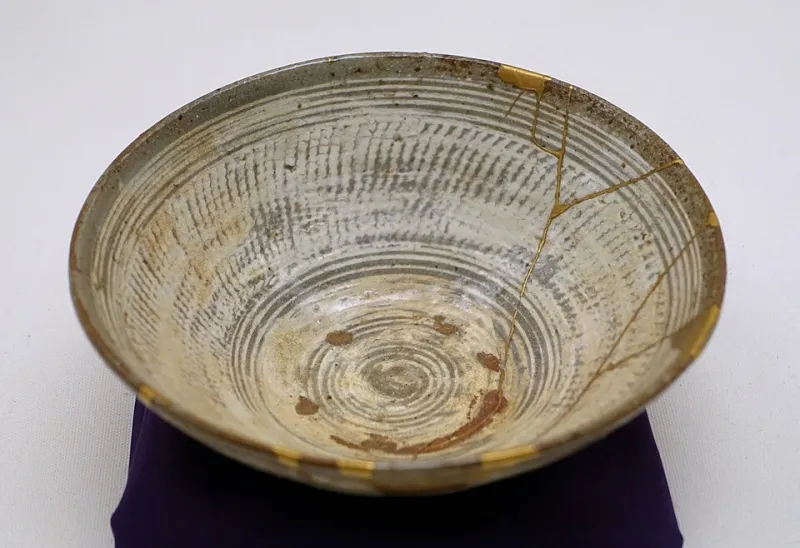
There is, of course, an object at the end of all this waiting — a bowl, a vessel, a form that carries within it the accumulated intelligence of years. Those who have undergone traditional Japanese apprenticeships consistently describe their finished work as qualitatively different from what they produced before: not merely more technically accomplished, but more fully inhabited.
Marcus Webb keeps one piece from his first year in Kyoto on a shelf in his Asheville studio — a small, unremarkable cup that his master deemed acceptable enough to keep. "It's not beautiful by any conventional measure," he says. "But I know what it cost. And that knowledge is in the clay somehow. Visitors sometimes pick it up and hold it longer than the other pieces. I don't think that's an accident."
The art of waiting, it turns out, leaves its mark on the thing made. And for a growing number of American ceramicists, that mark is exactly what they came to Japan to learn how to make.