Strings, Breath, and Thunder: How Japanese Instrument Makers Are Reshaping American Musical Identity
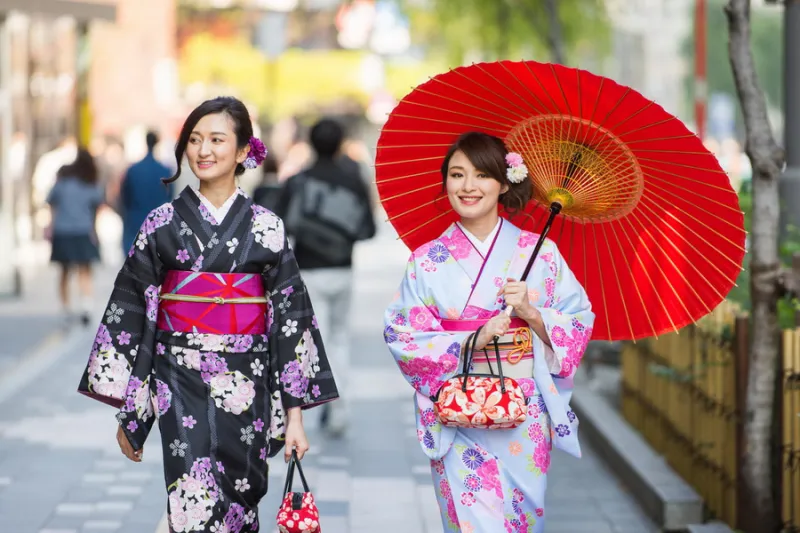
Photo: Japanese craftsman making shakuhachi bamboo flute traditional workshop, via www.advantour.com
In a workshop on the outskirts of Kyoto, a craftsman named Tanaka Hiroshi has spent the better part of four decades selecting bamboo. Not just any bamboo—only the specific variety known as madake, harvested in autumn, dried for two years, and tested for resonance by breath alone. The instrument he is building, a shakuhachi flute, will eventually find its way to a musician in Portland, Oregon, who has waited eighteen months for its completion. That wait, Tanaka says, is part of the instrument's story.
This dynamic—a Japanese master craftsperson and an eager American musician connected across an ocean by a shared reverence for sound—is becoming increasingly common. A generation of American artists is seeking something that modern music production, for all its technological sophistication, has struggled to provide: instruments that carry within them the full weight of human intention, natural material, and centuries of accumulated knowledge.
The Instrument as Artifact
To understand why American musicians are drawn to these instruments, it helps to understand what distinguishes a handcrafted Japanese instrument from its mass-produced counterpart. The difference is not merely aesthetic.
A shakuhachi, the end-blown bamboo flute associated with Zen Buddhist practice, is tuned not by mechanical precision but by the craftsman's ear and the instrument's own character. No two are alike. The interior bore is shaped by hand with specialized tools, and minute variations in diameter, length, and wall thickness determine the instrument's voice. Master craftspeople like Tanaka spend years learning to read bamboo—its age, its density, the direction of its grain—before they attempt to make an instrument that will last a lifetime.
The koto, Japan's thirteen-stringed zither, presents a different but equally demanding craft tradition. The body is carved from paulownia wood, prized for its acoustic properties and its lightness. A skilled koto maker will test dozens of boards before selecting the one whose resonance meets their standard. The strings, bridges, and lacquered finish are each the province of specialized knowledge passed down through apprenticeship rather than formal instruction.
Taiko drums occupy yet another dimension. The great drums used in ensemble performance—some standing taller than a person—are constructed from single hollowed logs, their heads made from cowhide stretched and tensioned over years. A single nagado-daiko can require a decade of preparation before it is ready to be played.
Americans at the Apprentice's Bench
For a growing number of American musicians, encountering these instruments has meant more than simply acquiring a new sound. It has meant traveling to Japan to sit at the feet of the people who make them.
Sarah Kline, a percussionist and composer based in San Francisco, made her first trip to Japan in 2016 after a decade of studying taiko performance in the United States. She had expected to deepen her technique. What she encountered instead was an entirely different relationship between maker and instrument.
"In American music education, we tend to treat instruments as tools," she explains. "You select the best one available and you play it. In Japan, I watched craftspeople talk about instruments as though they were living things—as though the wood had preferences, as though the drum wanted to be played in a certain way. That completely changed how I approached my own practice."
Kline has since returned to Japan three times, and she now collaborates with a taiko maker in Nara to commission drums built to her specific performance requirements. She describes the exchange as a conversation rather than a transaction.
For Marcus Webb, a flutist and music educator in Chicago, the journey began with a shakuhachi purchased secondhand at an estate sale. The instrument's sound—breathy, imprecise by Western standards, and hauntingly resonant—sent him searching for its origins. He eventually connected with a craftsman in Nagano through an American organization dedicated to promoting Japanese traditional music, and spent three weeks observing the instrument-making process.
"What struck me most was the silence in that workshop," Webb recalls. "There was almost no conversation. The craftsman worked for hours without speaking, and it became clear that the silence was not incidental—it was part of the practice. The instrument being made was designed to produce silence as much as sound."
The Philosophy Behind the Craft
This insistence on silence, on slowness, on the irreducible particularity of natural materials, is not incidental to Japanese instrument-making tradition. It is foundational.
Many of Japan's traditional instruments are linked to specific philosophical or spiritual frameworks. The shakuhachi is associated with suizen, or "blowing Zen," a meditative practice in which the production of sound is itself a form of contemplative discipline. The koto has deep ties to court culture and to the concept of ma—the meaningful interval of silence between notes. Taiko performance is rooted in communal ritual, in the idea that sound can mark sacred time and bind a community together.
For American musicians navigating an era of relentless digital stimulation, these frameworks carry particular appeal. The shakuhachi, which cannot be played without breath control and physical stillness, demands a quality of presence that is difficult to simulate. The koto requires the player to slow down, to listen for the decay of each note before the next is struck. Taiko demands coordination not with a metronome but with other bodies in a shared physical space.
"These instruments don't work if you're distracted," notes Dr. Yuki Tanabe, a musicologist at the University of Washington who studies the transmission of Japanese musical traditions in North America. "They were designed within philosophical systems that treat attention itself as a form of practice. That's not a coincidence—it's built into the physics of the instruments."
A Living Tradition in New Hands
The craftspeople who build these instruments are, in many cases, designated holders of important cultural knowledge in Japan. Some hold the designation of mukei bunkazai—intangible cultural property—a recognition that their skills are as significant as any physical artifact. What is less often acknowledged is the role that international interest has played in sustaining these traditions.
Tanaka Hiroshi, the shakuhachi maker in Kyoto, estimates that a significant portion of his commissions now come from outside Japan—from the United States, Australia, and Europe. The global appetite for handcrafted instruments, he suggests, has provided economic support for a craft that might otherwise struggle in a domestic market increasingly dominated by electronic music.
"When a young American musician comes to me and asks how the instrument is made, it reminds me why I do this work," he says. "The tradition does not belong only to Japan. It belongs to anyone who is willing to listen carefully enough."
That willingness to listen—carefully, patiently, with full attention—may be the most distinctly Japanese quality that American musicians are bringing back from their encounters with these instruments and the artisans who make them. In a musical culture that prizes speed, volume, and novelty, there is something quietly radical about an instrument that rewards stillness above all else.