Hands That Speak: The Profound Language of Japanese Craft Traditions
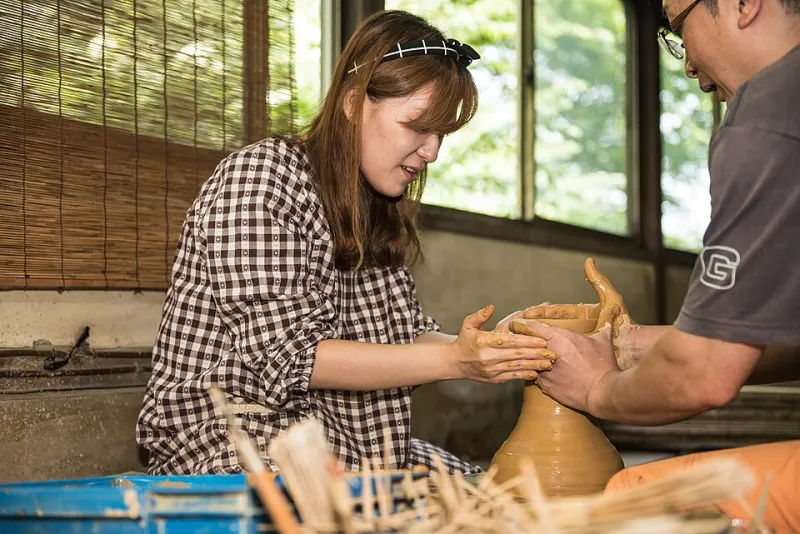
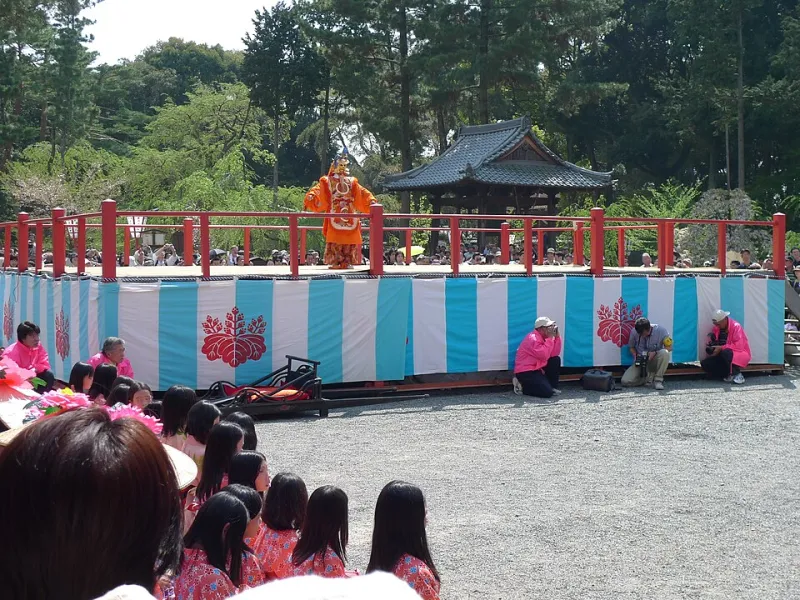
Photo: 甘 單, CC BY 2.0, via Wikimedia Commons
There is a moment, well known to anyone who has spent time in a Japanese ceramics studio, when the wheel stops spinning and a vessel simply exists. It did not arrive through explanation. No instruction manual guided its curves. It emerged from something far older—a conversation conducted entirely without words, between the maker's hands, the clay's resistance, and a tradition stretching back hundreds of years.
This is the quiet language at the heart of Japan's most enduring craft disciplines. From the ash-glazed stoneware of Bizen to the warp-and-weft dialogues of Nishijin silk weaving, Japanese artisans have long understood that the most profound meanings resist verbal expression. They must be felt, witnessed, and ultimately absorbed through patient practice.
The Philosophy Behind the Silence
To understand why silence holds such authority in Japanese craft culture, one must look to the philosophical traditions that shaped it. Concepts rooted in Zen Buddhism—mu (emptiness), wabi (the beauty of imperfection), and ma (the meaningful pause between moments)—do not translate neatly into language. They are, by nature, experiential. A potter who has internalized wabi does not describe it; he or she allows it to surface in an uneven rim, a glaze that pools unexpectedly in the foot of a bowl.
Kenichi Mori, a third-generation lacquerware artisan based in Kyoto who now leads annual workshops in collaboration with cultural institutions in the Pacific Northwest, describes this transmission as something closer to inheritance than instruction. "My grandfather never told me what urushi should feel like when it is properly applied," he explains. "He stood beside me for three years. I watched his wrist. I failed. I watched again. Eventually, my hands remembered what his hands already knew."
This model of embodied learning—what Japanese scholars sometimes call kata, the deeply internalized form—stands in striking contrast to Western pedagogical traditions that prioritize verbal explanation and written documentation. The craft itself becomes the archive.
The Potter's Argument
Ceramics may offer the most immediate entry point into this silent vocabulary for Western observers. The discipline of yakimono—literally, "fired things"—encompasses dozens of regional traditions across Japan, each with its own aesthetic grammar. Shigaraki ware speaks through deliberate roughness and wood-fire scarring. Hagi ware communicates through a soft, porous surface that changes over decades of use, absorbing tea and darkening in ways that mark the passage of time.
Sarah Olmstead, an American ceramicist based in Asheville, North Carolina, spent two years apprenticing under a master in Mashiko, the town made internationally famous by the late Shoji Hamada. She arrived expecting technical instruction and found something she struggled, at first, to define. "There was very little talking," she recalls. "I would make something, and he would pick it up, turn it, set it down. Sometimes he would make a very small sound—not approval, not disapproval—just acknowledgment. Over time I began to understand that his silence was information. It told me I needed to look harder."
Olmstead now teaches her own students in Asheville using a hybrid approach, blending verbal instruction with extended periods of what she calls "witnessing practice"—structured observation of expert work conducted without commentary. She credits her time in Mashiko with fundamentally reshaping her understanding of mindfulness in the studio. "Western craft culture is often very verbal about intention," she observes. "In Japan, I learned that intention lives in the body before it lives in language."
Weaving Stories Without Words
If ceramics speaks through form and surface, Japanese textile traditions communicate through structure itself. The complexity of Nishijin ori—the elaborate silk weaving technique developed in Kyoto over more than a thousand years—encodes narrative, season, and social meaning in patterns that a trained eye can read the way others read text.
Floral motifs signal specific months of the year. Geometric arrangements carry regional identities. The weight and density of a weave conveys formality or intimacy. A master weaver does not simply produce cloth; she authors a document that speaks to those who know how to listen.
Yuki Tanaka, a textile artist and educator who divides her time between Kyoto and a studio in Brooklyn, New York, emphasizes that this communicative depth is inseparable from the physical discipline required to produce it. "You cannot fake the language," she says. "The loom will expose any shortcut. The pattern either holds or it does not. This is the honesty that weaving teaches—your hands cannot lie."
For Tanaka, introducing American students to Nishijin techniques is not simply a matter of transferring technical skill. It is an invitation into a different relationship with time and attention. "Most of my students come from environments where speed is valued," she notes. "The loom slows everything down. You begin to understand that the cloth is not the product—the attention is the product."
Metal's Memory
Perhaps nowhere is the non-verbal dimension of Japanese craft more dramatically apparent than in the tradition of tatara ironwork and the broader discipline of metalsmithing that produced the Japanese sword. The katana is, in one sense, a functional object. In another, it is a philosophical text—a record of decisions made under extreme conditions, each fold of the steel preserving evidence of the smith's judgment.
Contemporary Japanese metalworkers operating in this lineage describe their practice in terms that echo the ceramicist's and the weaver's: the material teaches, the tradition guides, and the maker's role is ultimately one of attentive service to both. The finished object carries this relationship forward, communicating its origins to anyone skilled enough to read it.
Why This Matters in America Today
Across the United States, a growing number of craft practitioners, educators, and cultural enthusiasts are discovering that these silent traditions offer something their own culture has rarely provided: a structured way of being present. The mindfulness movement has brought widespread interest in meditative practice, but Japanese craft disciplines offer something more grounded—mindfulness with a material consequence, attention made visible in clay or thread or metal.
Community studios in cities from Portland to Philadelphia are increasingly incorporating Japanese craft philosophies into their programming, not as appropriation but as genuine cross-cultural dialogue. The artisans who carry these traditions—whether working in Kyoto or Brooklyn—are finding receptive audiences in Americans hungry for practices that honor slowness, imperfection, and the wisdom stored in the body.
The silent masters have always known what their hands could say. The conversation, it seems, is only widening.