Standing Together: How Japan's Festival Queue Culture Is Rebuilding the American Sense of Shared Space
In most corners of American public life, a line is something to be defeated. It is an obstacle between a person and whatever they came to receive—coffee, a concert seat, a vendor's signature dish. The instinct is to shorten it, bypass it, or dissolve it entirely through digital pre-ordering and timed-entry passes. Efficiency, in the American civic imagination, has long been the enemy of waiting.
Japanese festival culture proposes something entirely different.
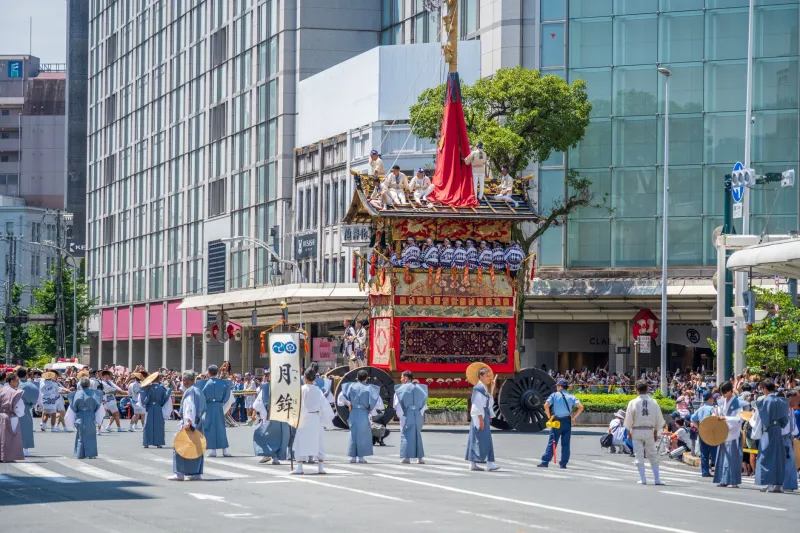
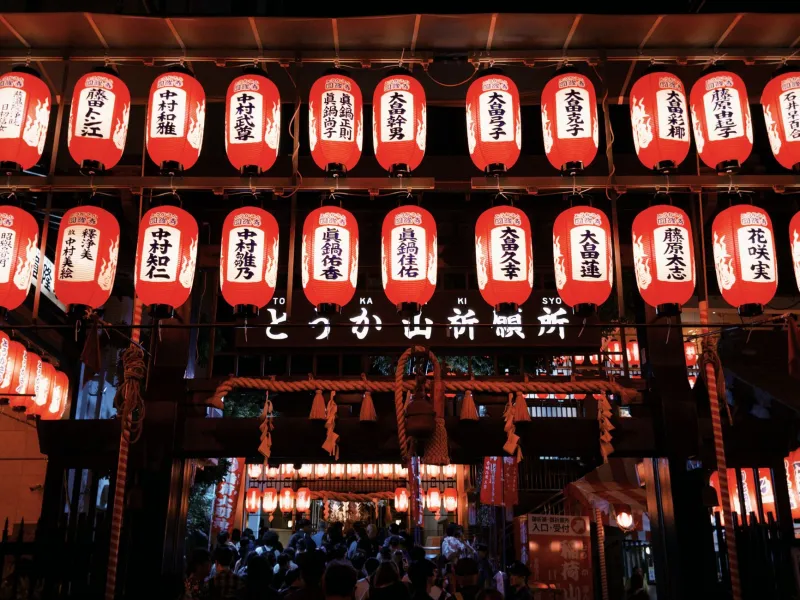
At matsuri across Japan—from the lantern-lit corridors of regional bon odori celebrations to the meticulously organized queues outside prized artisan stalls at major craft fairs—waiting is treated as a constituent part of the experience itself. It is structured, unhurried, and, perhaps most remarkably, genuinely social. The line is not incidental to the festival. In many respects, it is the festival.
A growing number of American cultural organizers, festival directors, and urban planners are paying close attention to this distinction. What they have found is that the Japanese approach to collective waiting offers something their own events have quietly lost: the conditions for spontaneous human connection.
The Architecture of the Japanese Queue
To understand why Japanese festival queues function so differently from their American counterparts, it helps to examine what surrounds them. At a traditional Japanese craft fair or seasonal festival, the physical environment of the waiting space is rarely an afterthought. Organizers frequently provide shaded areas, ambient sound—whether live performance or the natural acoustics of the surrounding landscape—and clear sightlines to whatever lies ahead. The queue is designed to be inhabited, not merely endured.
There is also a pronounced social etiquette at work. Japanese queuing culture carries an implicit expectation of mutual courtesy: space is given, voices are moderated, and the presence of others is acknowledged rather than ignored. Strangers standing in proximity for twenty or thirty minutes frequently exchange observations about the event, share recommendations for nearby stalls, or offer brief histories of the artisan whose work they have come to see. The line becomes, in effect, a temporary community organized around a shared purpose.
This is not accidental. Festival organizers in Japan have long understood that the anticipation cultivated by waiting heightens the eventual experience. The craft object examined after a patient queue carries a different weight than one plucked casually from a shelf. The performance attended after an hour of collective stillness lands with greater resonance. Waiting, properly designed, is a form of preparation.
What American Organizers Are Discovering
Several American festival directors who have studied Japanese matsuri firsthand have begun applying these principles to their own events, sometimes with striking results.
At a regional Japanese heritage festival held annually in the Pacific Northwest, coordinators restructured their artisan showcase entrance to include a designated gathering corridor—essentially a formalized queue space—lined with interpretive panels about the craftspeople inside and ambient recordings of traditional instruments. Attendees who might otherwise have dispersed into a general admission crowd instead moved through the space together, reading, listening, and talking. Exit surveys from the redesigned event noted a measurable increase in the number of attendees who reported meeting someone new during the festival.
Similar experiments have taken place at Japanese cultural events in Chicago and the San Francisco Bay Area, where organizers have introduced what some describe as "intentional waiting zones"—areas designed to slow arrival, encourage conversation, and frame the experience of anticipation as something worth savoring rather than accelerating past.
The results, while still anecdotal, point toward a broader hunger. In an era defined by algorithmic personalization and the frictionless delivery of entertainment, many Americans appear to be quietly starved for the kind of unscripted encounter that a shared physical space—and a little enforced patience—can provide.
The Psychology of Productive Waiting
Researchers who study social behavior in public spaces have noted for some time that the conditions under which people wait significantly influence whether they interact. Uncertainty and discomfort tend to produce withdrawal; clarity, comfort, and shared purpose tend to produce openness. The Japanese festival queue, with its legible structure and communal atmosphere, creates precisely the latter conditions.
There is also the matter of what psychologists sometimes call "shared fate"—the phenomenon whereby people who experience the same circumstances together, even minor ones, report stronger feelings of social connection. Waiting for the same thing, in the same space, alongside the same strangers, is a small but genuine form of solidarity. The Japanese cultural tradition has institutionalized this insight without necessarily naming it.
For American communities navigating what many public health researchers have characterized as a loneliness epidemic, this framing carries real weight. The problem is not simply that people lack friends; it is that the architecture of daily American life—suburban commutes, private digital consumption, contactless transactions—provides fewer and fewer occasions for the kind of low-stakes, face-to-face encounter out of which friendships are sometimes made. A well-designed festival queue, improbably enough, is one such occasion.
Patience as a Cultural Practice
What makes the Japanese festival queue particularly instructive for American observers is that it does not ask participants to perform patience as a private virtue. It asks them to practice it together, in public, within a shared cultural framework that treats the act of waiting as meaningful rather than wasteful.
This is, at its core, a question of values embedded in spatial design. When a festival treats its queue as dead time—something to be processed and eliminated—it signals that only the destination matters. When it treats the queue as living time—something to be shaped and inhabited—it signals that the journey toward an experience is itself part of what makes the experience worth having.
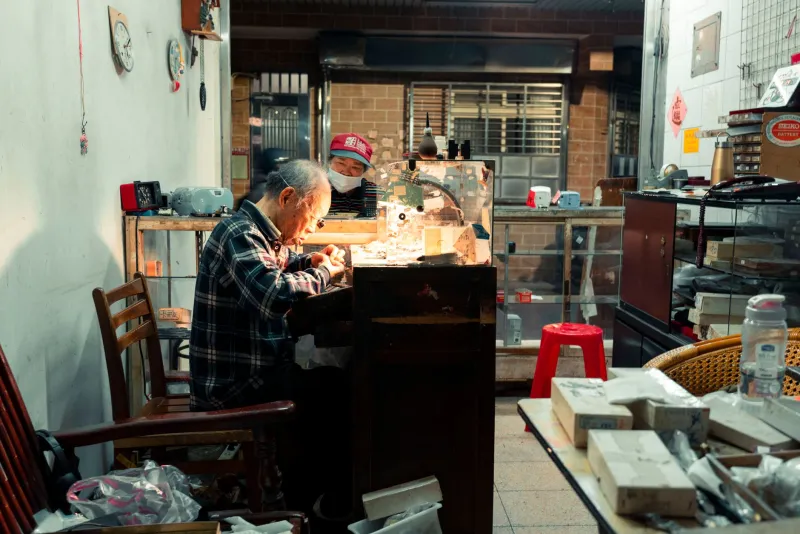
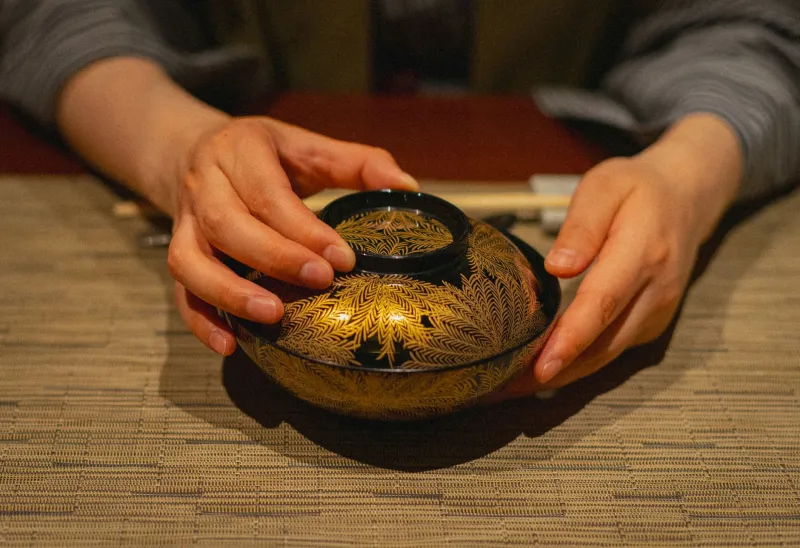
Japanese craft traditions have long understood this principle. The apprentice who waits years before being permitted to attempt a master technique is not simply accumulating time; they are being formed by the waiting. The tea ceremony guest who arrives early and sits in the roji garden before entering the tea house is not merely filling minutes; they are being prepared, through stillness and anticipation, to receive what follows with full attention.
The festival queue is a public, accessible version of the same discipline. It does not require years of training or cultural fluency. It requires only a willingness to stand alongside others, to resist the urge to accelerate, and to notice what happens when strangers are given both the time and the space to become, briefly, something more than strangers.
A Different Kind of Festival
American festival culture has always been vibrant and inventive, but it has increasingly organized itself around the elimination of friction—faster entry, personalized schedules, cashless transactions, and on-demand access to every corner of the event. These are genuine conveniences. They are also, in certain respects, conveniences that cost something.
What Japanese festival queue culture offers is not a rejection of efficiency but a reminder that some forms of friction are generative. The slight resistance of a well-designed wait, the mild uncertainty of standing beside someone you do not yet know, the shared anticipation of something that cannot be streamed or downloaded—these are not problems to be solved. They are, perhaps, precisely the conditions under which community is made.
For American organizers willing to take that seriously, the lesson from Japan is both practical and profound: build the line thoughtfully, and the people standing in it may surprise you.