Crossing Over: The American Artisans Who Left Everything to Become Japanese Craft Apprentices
For most Americans, the decision to pursue a craft begins with a weekend workshop, a YouTube tutorial, or perhaps enrollment in a community college course. For a small but increasingly visible cohort of artisans, however, the path has led somewhere far more demanding: a traditional Japanese workshop, where the hours are long, the hierarchy is absolute, and the education unfolds not in semesters but in years.
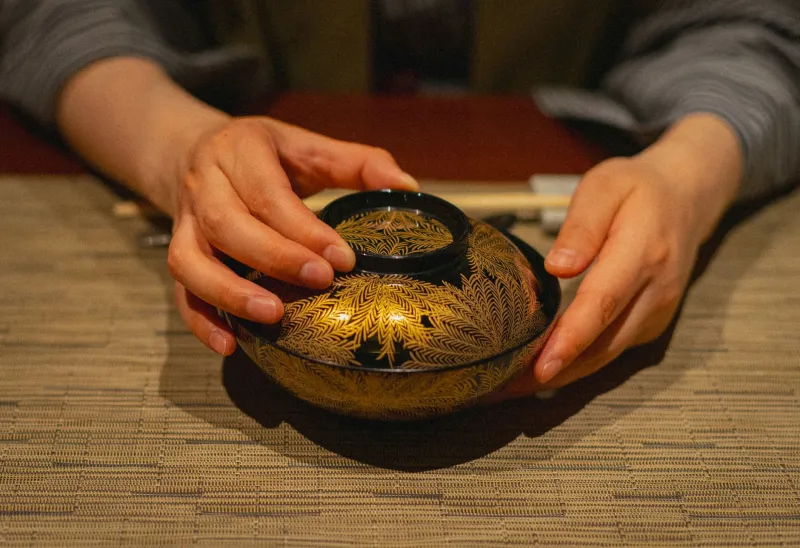
These are the Americans who have entered the uchi-deshi system—Japan's live-in apprenticeship model—to study disciplines ranging from urushi lacquerware and katana forging to nishiki-ori brocade weaving and washi papermaking. What drives them across the Pacific, and what do they bring back when they return?
A Gap No Curriculum Can Fill
The United States possesses a rich tradition of craft education, from the storied programs at institutions like the Penland School of Craft in North Carolina to the Rhode Island School of Design. Yet for certain Japanese art forms, no American institution offers training that approaches the depth or duration of what a traditional Japanese workshop provides. A student wishing to study maki-e—the intricate lacquer decoration technique that can take a master decades to perfect—will find no accredited program waiting for them stateside.
This absence is not incidental. It reflects a structural reality: many Japanese craft traditions require not merely instruction but total immersion in a living culture of practice. The knowledge is embodied, relational, and sequential in ways that resist condensation into academic modules. Techniques are transmitted through proximity, repetition, and correction delivered across years of daily contact between master and apprentice.
For Americans drawn to these disciplines, Japan is not simply a destination of preference. In many cases, it is the only destination.
The Architecture of the Uchi-Deshi Life
The uchi-deshi system—literally, "inside student"—predates Japan's modern educational infrastructure by centuries. At its core, it demands that the apprentice subordinate nearly every aspect of daily life to the workshop and its rhythms. Apprentices may live on the premises of the master's home or studio, wake before dawn to prepare the workspace, and spend their earliest months performing tasks that appear entirely unrelated to the craft itself: cleaning, preparing materials, observing in silence.
For American students accustomed to more egalitarian pedagogical relationships, this can be profoundly disorienting. Several Americans who have undergone the process describe an initial period of acute discomfort—not merely from the physical demands or the language barrier, but from the fundamental reorientation of their role. In the uchi-deshi model, the student does not consume knowledge. The student earns the right to receive it.
Over time, this architecture reveals its logic. By performing the peripheral tasks of the craft—maintaining tools, sourcing materials, understanding the workshop's seasonal rhythms—the apprentice absorbs a contextual intelligence that no textbook could convey. They come to understand not just how a form is made, but why it is made in a particular way, at a particular time, using particular materials prepared in a particular manner.
What the Return Journey Looks Like
Americans who complete substantial apprenticeships in Japan—typically spanning anywhere from two to eight years—return as changed practitioners. Many describe the experience in terms that go beyond skill acquisition. The discipline of the workshop, they report, has altered their relationship to time, to imperfection, and to the meaning of work itself.
Some return with the explicit intention of establishing teaching studios or small workshops that carry the tradition forward on American soil. Others partner with museums, cultural organizations, or Japanese-American community centers to offer demonstrations, workshops, and educational programming. A handful have been recognized by Japanese cultural bodies as legitimate bearers of specific craft lineages—an acknowledgment that carries both honor and obligation.
The challenge they face upon returning is considerable. American markets, with some notable exceptions, have not historically placed the same economic value on handmade traditional objects that Japanese cultural institutions and collectors do. An apprentice who has spent five years learning to apply urushi lacquer in the manner of a particular regional school may find that translating that mastery into a sustainable livelihood requires considerable creative navigation.
Yet many persist, driven by a conviction that the traditions they carry are worth sustaining regardless of market conditions. In this sense, they function less as entrepreneurs and more as what one might call cultural stewards—individuals who have accepted a form of custodial responsibility that extends beyond personal ambition.
The Question of Belonging
Not all aspects of this phenomenon are uncomplicated. The question of cultural transmission across national and ethnic lines is one that scholars, practitioners, and Japanese communities themselves continue to examine with care. Is it appropriate for a non-Japanese practitioner to present themselves as a bearer of a Japanese craft tradition? What obligations does such a practitioner carry toward the culture from which the tradition originates?
Many American uchi-deshi alumni engage these questions with seriousness and humility. They are careful to situate their work within its cultural origins, to credit their masters and lineages explicitly, and to resist any framing that would position them as sole authorities on traditions that belong to living communities in Japan. The most thoughtful among them describe their role not as ownership but as stewardship—a temporary and accountable custodianship of knowledge that must always be traced back to its source.
Japanese masters who have accepted American apprentices often speak of their own motivations in terms of preservation. With fewer young Japanese nationals entering certain craft disciplines, some masters have come to see international apprentices as a means of ensuring that the knowledge does not simply disappear. The transmission, in their view, matters more than the nationality of the vessel.
A Living Bridge
What this growing movement ultimately represents is a form of cultural dialogue conducted not in words but in practice—in the hours spent at a lacquer table, before a forge, or at a loom. The Americans who undertake these apprenticeships are not tourists or enthusiasts in the conventional sense. They are individuals who have staked years of their lives on the belief that certain forms of knowledge are worth the sacrifice required to carry them.
For those of us who care about the survival of Japan's living craft traditions, their commitment offers something genuinely valuable: proof that mastery can cross borders when the will and the respect are sufficient to sustain the crossing. In a moment when many of these traditions face real and urgent threats from demographic change and shifting economies, the presence of dedicated international practitioners may represent one of the more promising forms of continuity available.
The apprentice's path is long, and the oath taken at its beginning is rarely spoken aloud. But in the hours of silent work that follow, it is honored in the only way that ultimately matters.