Earned by Waiting: How Japanese Festival Culture Is Reintroducing Americans to the Power of Anticipation
There is a particular kind of excitement that cannot be manufactured. It does not arrive through a notification, a streaming queue, or a same-day delivery. It accumulates—slowly, almost imperceptibly—across weeks and months of anticipation, until the moment of arrival feels not merely enjoyable but genuinely earned. This is the experience at the heart of Japan's most enduring festival traditions, and it is one that Americans, fatigued by the relentless pace of always-on entertainment, are beginning to seek out with quiet urgency.
A Calendar Built on Longing
To understand how Japanese matsuri—the broad term encompassing the country's thousands of traditional festivals—relate to time, one must first set aside the Western assumption that a festival is primarily an event. In Japan's living heritage, a matsuri is more accurately understood as a culmination: the visible peak of a preparation cycle that may stretch across an entire year.
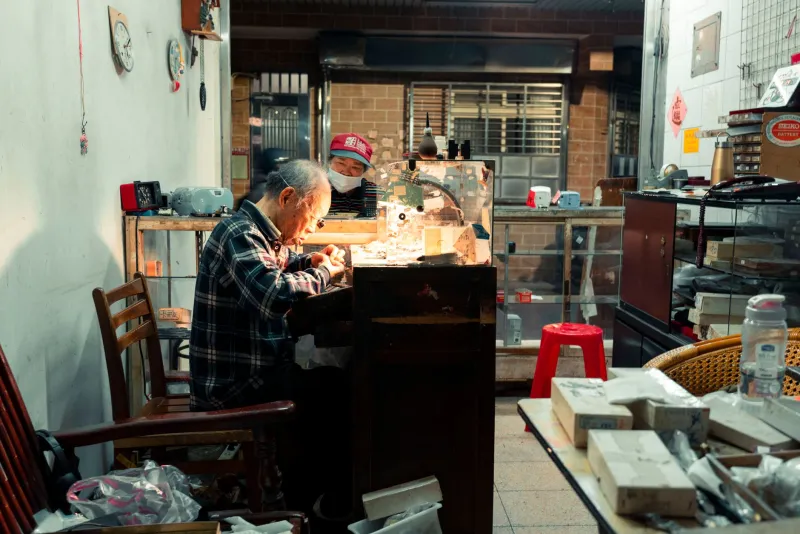
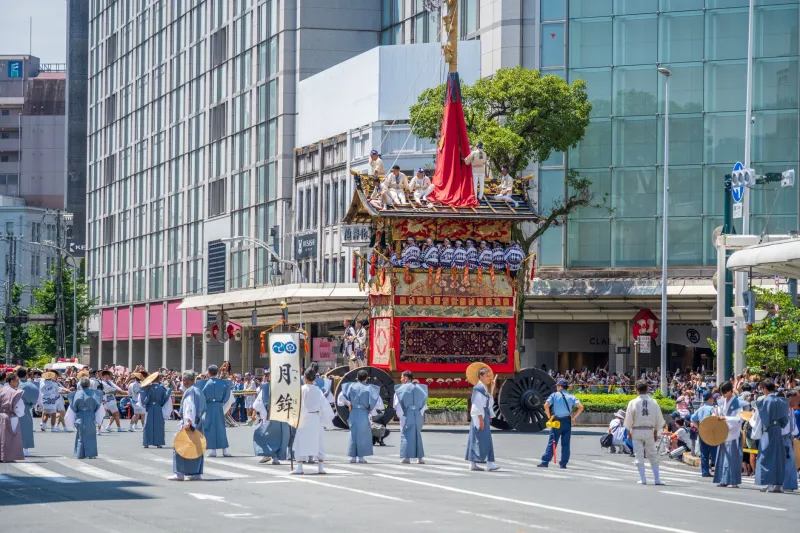
Takayama Matsuri, held each spring and autumn in the mountain city of Takayama in Gifu Prefecture, offers one of the most instructive examples. The festival's celebrated yatai—elaborately constructed floats bearing mechanical karakuri puppets—require months of meticulous maintenance and rehearsal by dedicated craftspeople before a single wheel turns on the festival day itself. The artisans who tend these floats operate within a tradition of stewardship that predates the Edo period. Their labor is largely invisible to the public, yet it is precisely that invisible labor which gives the festival its weight. When the floats finally emerge through the morning mist of the Higashiyama district, the spectacle is inseparable from the knowledge—felt if not always consciously articulated—that what one is witnessing has been prepared for, cared for, and waited upon.
This structure of concealed effort and patient timing is not incidental to the matsuri experience. It is its architecture.
The Seasonal Logic of Japanese Ceremony
Beyond festival culture proper, the Japanese relationship with anticipation is embedded in the philosophy governing the tea ceremony calendar. Chanoyu, the formalized practice of preparing and presenting matcha, operates according to a seasonal rhythm that divides the year into distinct ceremonial modes—each with its own utensils, aesthetics, and emotional register. The transition from the ro season, when the sunken hearth is used during colder months, to the furo season of the portable brazier in warmer months, is treated as a meaningful threshold rather than a logistical adjustment.
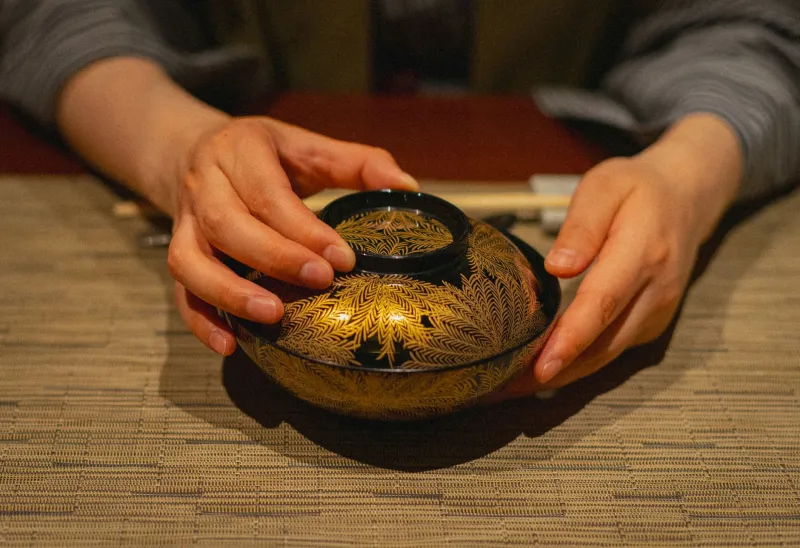
For practitioners, the approach of each seasonal shift carries its own form of anticipation. Certain tea bowls, certain scroll paintings, and certain wagashi confections belong to specific moments in the year and appear at no other time. Their rarity is not artificial scarcity—it is the natural consequence of a system designed to make each encounter feel singular and unrepeatable. The pleasure of the first autumn tea gathering is inseparable from the months during which autumn tea gatherings did not exist.
American practitioners who have entered the world of chanoyu frequently describe a disorienting but ultimately liberating reorientation of their relationship with time. What initially reads as constraint—why must this bowl be reserved only for this season?—gradually reveals itself as a form of abundance. Limitation, in this framework, is the precondition for meaning.
What the On-Demand Economy Has Cost Us
The contrast with contemporary American entertainment culture is difficult to overstate. Streaming platforms have effectively abolished the experience of waiting for a cultural moment. Music releases arrive without warning. Films debut simultaneously worldwide. Even live sports, once among the few remaining shared real-time experiences, are increasingly time-shifted and consumed in isolation. The result is a cultural landscape of extraordinary access and, for many, a creeping sense of diminishment—a feeling that nothing quite lands with the force it once did.
Cultural researchers and event planners working in the experiential economy have begun to identify what some call "anticipation deficit"—a condition in which the removal of waiting has inadvertently stripped cultural experiences of their capacity to resonate. When everything is available immediately, nothing feels like an occasion.
This is the gap into which Japanese festival philosophy steps with remarkable precision.
American Audiences and the Rediscovery of the Occasion
Across the United States, Japanese cultural organizations and heritage festivals have observed a notable shift in the profile of their audiences. Whereas Japanese matsuri celebrations in American cities—events held in communities from Los Angeles to Chicago to Honolulu—once drew primarily Japanese-American attendees and dedicated cultural enthusiasts, recent years have seen a broadening of interest that cuts across demographic lines.
Event organizers report that visitors increasingly express not just enjoyment of the festival itself but appreciation for its structure: the fact that it comes once a year, that certain performances are prepared specifically for this occasion, that the food, the music, and the ritual elements belong to a specific time and will not return until the cycle completes itself again. The annual Nisei Week Japanese Festival in Los Angeles, one of the oldest Japanese American cultural celebrations in the country, has seen renewed interest from younger attendees who describe the event's fixed place in the calendar as one of its primary appeals.
For American event planners influenced by this tradition, the implications are practical as well as philosophical. A growing cohort of designers and producers is experimenting with what might be called "intentional scarcity of access"—structuring cultural experiences around limited availability, advance preparation, and deliberate pacing rather than maximum convenience. The goal is not to frustrate audiences but to restore the conditions under which anticipation can build and deepen.
Preparing to Receive
There is a concept in Japanese aesthetic philosophy—ma, the meaningful interval of space or time between events—that speaks directly to what anticipation, properly cultivated, accomplishes. Ma is not emptiness in the sense of absence. It is emptiness in the sense of readiness: a space cleared and held open so that what arrives into it may be fully received.
Japanese festival culture, in its deepest expression, is an extended practice of creating ma. The months of preparation before Takayama's floats roll forward, the seasonal restrictions governing the tea ceremony room, the precise timing of the taiko drum's entrance in a Noh performance—all of these are forms of ma, intervals of withholding that transform the moment of arrival into something the body and mind are genuinely prepared to receive.
For Americans navigating a media environment that has abolished nearly every interval, the encounter with this philosophy can feel less like a cultural curiosity and more like a corrective. What Japanese festival tradition offers is not nostalgia for a slower world—it is a functional technology for restoring the conditions under which experience can matter.
The wait, it turns out, is not the obstacle. It is the point.