Permanent Grounds: How Japanese Artisan Communities Are Turning Festival Energy into Lasting American Spaces
For most Americans, a Japanese cultural festival exists within a tightly bounded frame: a Saturday afternoon, a closed-off city block, the scent of yakitori drifting through a parking structure temporarily transformed into something extraordinary. Then Monday arrives, the banners come down, and the artisans disperse. The encounter, however vivid, belongs to memory rather than to daily life.
A growing movement across the United States is working to dismantle that boundary entirely.
From the Pacific Coast to the mid-Atlantic, Japanese craftspeople, cultural organizations, and community architects are establishing permanent spaces that carry the animating spirit of the traditional matsuri—the Japanese festival—into every season of the year. These are not museums. They are not classrooms in any conventional sense. They occupy a distinct category: living cultural grounds where the spontaneity, ritual, and social warmth of the festival are not performed on a schedule but sustained as a continuous condition of the space itself.
What a Festival Actually Is
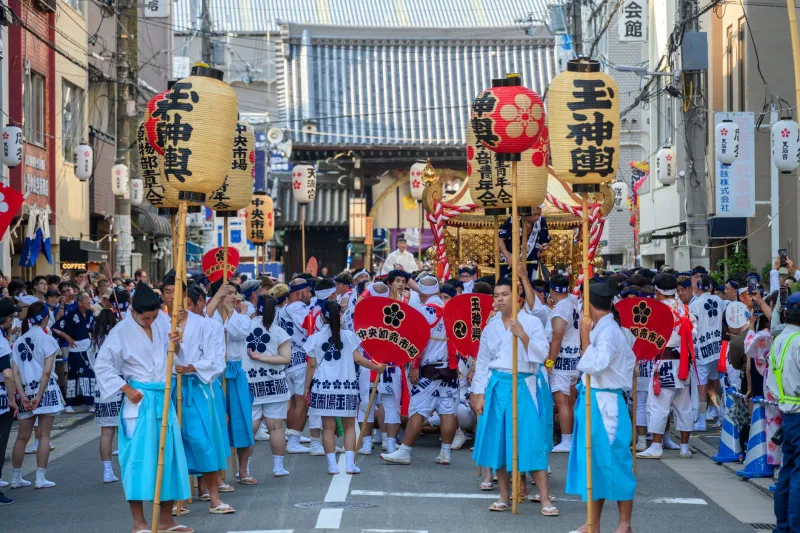
To understand why this movement matters, it helps to understand what a traditional Japanese festival is not. It is not, at its core, a commercial event or a tourist attraction. The matsuri is a communal ritual with deep roots in Shinto observance—a structured occasion for a community to reaffirm its shared identity, honor its heritage, and make space for both the sacred and the celebratory to coexist.
Central to the matsuri experience is the concept of ke and hare—the Japanese distinction between the ordinary and the extraordinary. The festival transforms everyday space into something charged with meaning. Streets become processional routes. Strangers become participants in a shared narrative. The artisan's stall is not merely a point of sale but a demonstration of living knowledge, an invitation to witness and perhaps to learn.
What the founders of these permanent spaces have recognized is that the hunger for hare—for that charged, meaningful quality of experience—does not expire when the festival weekend ends. It simply goes unmet.
Spaces That Hold the Energy
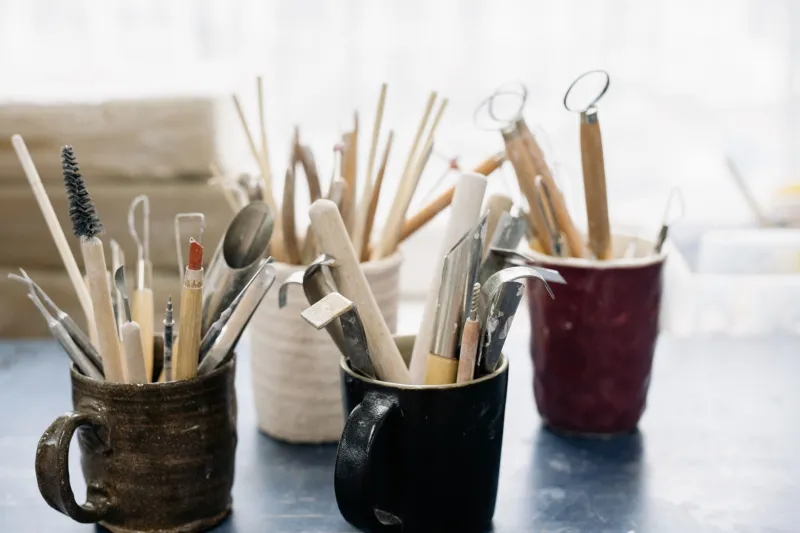
In Portland, Oregon, a collective of Japanese and Japanese-American ceramic artists established what its founders describe simply as "a place where the kiln is always warm." Operating out of a converted industrial building in the city's east side, the space functions simultaneously as a working studio, a public gallery, and a gathering hall where monthly demonstrations draw participants who return not for a single event but for an ongoing relationship with the craft and with one another.
"We kept asking ourselves why the energy of the festival had to disappear," says one of the collective's founding members, a Kyoto-trained potter who relocated to Portland nearly a decade ago. "In Japan, the shrine is there every day. The festival is the heightened moment, but the community exists continuously around the shrine. We wanted to build the equivalent of that—a place with a continuous presence."
Similar spaces have taken root in Los Angeles, Chicago, and the Washington, D.C., metropolitan area, each shaped by the specific heritage traditions of the artisans and communities involved. Some center on textile arts—indigo dyeing, shibori, the meticulous world of Nishijin-style weaving. Others orbit woodworking, lacquerware, or the broad and ancient discipline of paper craft. What they share is a deliberate architecture of welcome: open studio hours, rotating artisan residencies, and programming that mirrors the seasonal rhythm of the traditional festival calendar without constraining participation to a single annual moment.
The Visitor Who Becomes a Regular
For many Americans who have discovered these spaces, the transition from curious visitor to invested community member follows a pattern that the spaces' founders have come to recognize and, in some cases, deliberately cultivate.
A graphic designer based in Chicago describes her first visit to a Japanese craft collective on the city's north side as something she had not anticipated needing. "I went because a friend mentioned they were doing a suminagashi demonstration—marbling on water. I thought it would be a pleasant Saturday afternoon." She pauses. "I've been back almost every week for two years. I help with the newsletter now."
This arc—from spectator to participant to steward—echoes the social structure of the traditional matsuri, where community members occupy different roles depending on their depth of involvement, and where the festival's vitality depends on that layered participation. The permanent spaces, by extending the invitation across time rather than compressing it into a weekend, allow that deepening to occur organically.
Maintaining the Ritual Without Freezing It
One of the more delicate challenges these spaces navigate is the tension between ritual consistency and creative vitality. Traditional festivals derive much of their power from repetition—the same procession, the same prayers, the same sequence of events performed year after year, generation after generation. That repetition is not stagnation; it is the mechanism through which meaning accumulates.
A permanent space cannot simply repeat itself indefinitely. It must evolve, introduce new voices, respond to its community's changing composition. The most successful of these American cultural grounds have addressed this by structuring their programming around the Japanese seasonal calendar—kisetsukan, or seasonal awareness—allowing recurring observances to provide a ritualistic backbone while the specific content of each gathering shifts with the artisans in residence and the skills being explored.
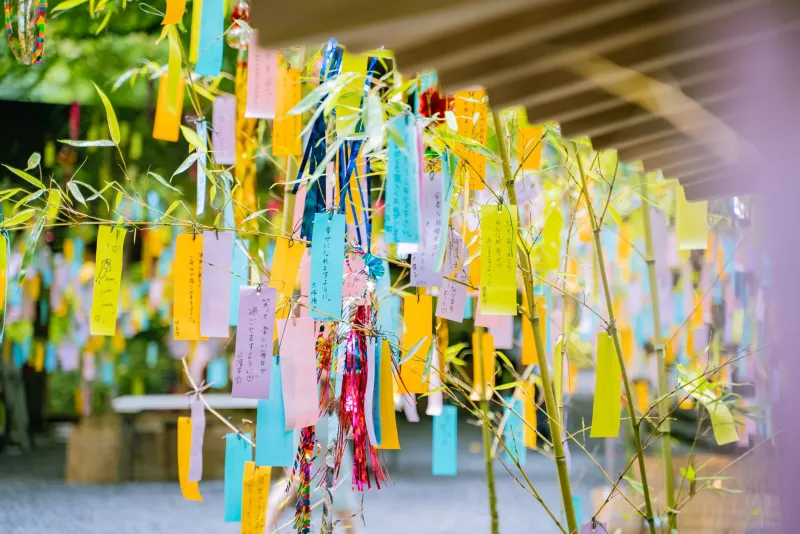
"We celebrate Tanabata, we acknowledge Otsukimi, we mark the arrival of each season in some way," explains the director of a Japanese arts organization in the San Francisco Bay Area that operates a year-round community studio. "Those moments give people something to return to, something to anticipate. But between those anchor points, the space is always different, always alive."
A New Kind of American Cultural Institution
What is emerging, across these varied cities and communities, is something that does not map cleanly onto existing American institutional categories. These spaces are not ethnic enclaves, though they are often rooted in Japanese-American community life. They are not commercial galleries, though artisan work is sometimes available for purchase. They are not schools, though learning is central to everything that occurs within them.
They are, perhaps most accurately, what the Japanese cultural tradition has always understood a festival ground to be: a commons. A place where the ordinary conditions of daily life are temporarily—or, in this case, permanently—suspended in favor of something more intentional, more connected, and more alive.
For Americans navigating a cultural moment defined by fragmentation and digital mediation, these spaces offer something increasingly rare: a physical place where belonging is not performed for an audience but practiced among people who have chosen, again and again, to show up.