Sacred Noise, Sacred Stillness: What Japanese Festival Architecture Teaches American Meditators About the Art of Full Presence
For decades, the dominant image of contemplative practice in America has been one of subtraction. Quiet rooms. Closed eyes. The careful removal of distraction. Yet a growing cohort of meditation teachers and wellness educators across the United States is arriving at a counterintuitive conclusion: some of the most advanced technologies for cultivating presence were never designed to be quiet at all. They were designed to be festivals.
The Japanese matsuri — a term encompassing the vast spectrum of Shinto-rooted seasonal celebrations — is not, at its core, a performance staged for spectators. It is a structured encounter between the human nervous system and the sacred. And as American practitioners are beginning to discover, the architecture of that encounter bears a striking resemblance to some of the most sophisticated frameworks in contemplative science.
The Sensory Gateway
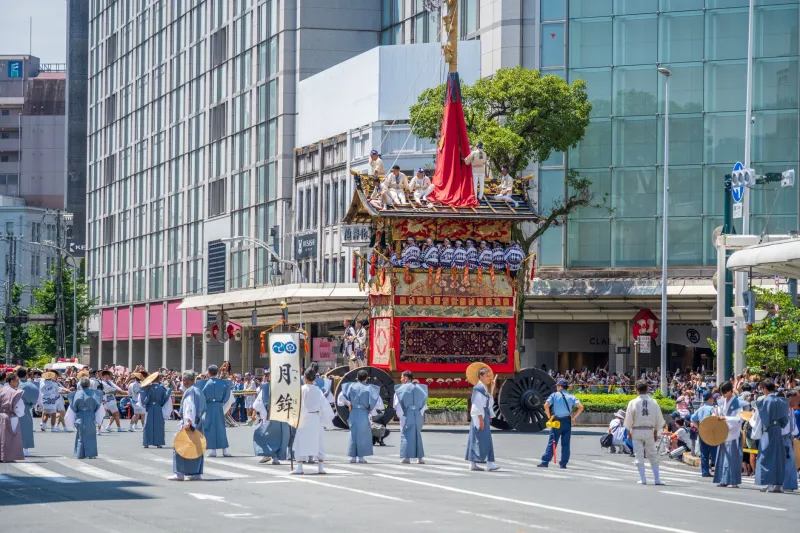
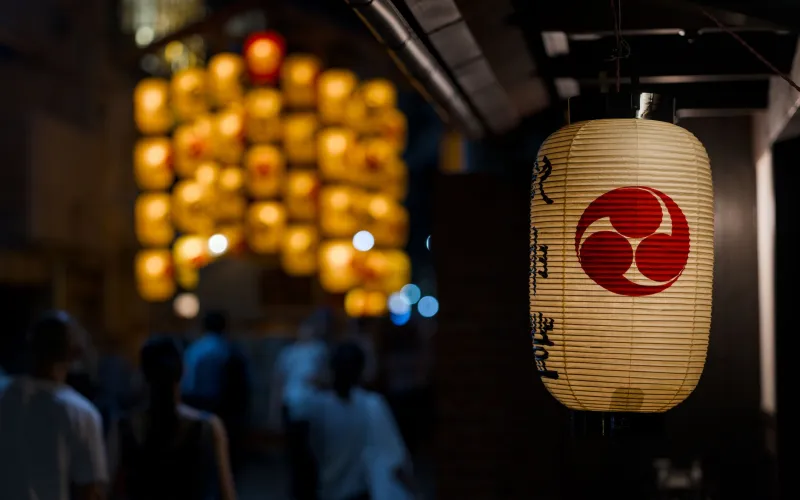
Consider what a participant actually moves through during the Gion Matsuri, Kyoto's celebrated monthlong festival centered on the seventeenth of July. The approach alone constitutes what meditation researchers might call a "threshold experience" — a deliberate passage through escalating sensory density that disrupts ordinary cognitive patterns. The smell of cedar and lacquer from the towering yamaboko floats, the layered percussion of hayashi musicians, the press and warmth of thousands of bodies moving in shared purpose: each element compounds the last, producing a state of heightened receptivity that is functionally distinct from everyday awareness.
Jennifer Alcott, a mindfulness educator based in Portland, Oregon, who spent three weeks in Kyoto during the 2019 Gion Matsuri, describes the experience in terms her students immediately recognize. "We talk constantly about 'arriving in the body,' about dropping out of the planning mind and into direct sensation. I spent years teaching people to do that in a quiet room with their eyes closed. Then I stood on Shijo-dori at dusk with the gion-bayashi playing and realized that the festival had accomplished in four minutes what I work to achieve in a forty-five-minute guided session."
Alcott has since restructured a portion of her curriculum around what she calls "immersive anchoring" — the use of dense, multi-sensory environments as a vehicle for presence rather than an obstacle to it.
Temporal Precision as Contemplative Design
What distinguishes matsuri from ordinary public spectacle is not merely sensory richness but temporal precision. Japanese seasonal festivals are not approximate. The Aoi Matsuri, held each fifteenth of May at Kyoto's Kamigamo and Shimogamo shrines, has maintained its date for over a millennium. The procession follows a prescribed route, a prescribed order, a prescribed duration. This rigidity is not bureaucratic. It is cosmological. The festival occurs when it occurs because the calendar itself is understood as a living structure, and the human community participates in maintaining its integrity.
For American meditation teachers trained in traditions that emphasize flexibility and personalization, this fixed temporality initially reads as constraint. On closer examination, it functions as liberation. When the moment of a festival is known months in advance, the practitioner can orient toward it — can allow the approach of the date to restructure daily awareness in ways that a spontaneous experience never could. Several teachers interviewed for this piece described adopting the practice of marking festival dates in their personal and professional calendars not merely as reminders but as what one instructor called "temporal anchors" — fixed points around which a more intentional relationship with time could be organized.
David Harrington, who leads contemplative retreats in western Massachusetts and has traveled to Japan four times specifically to attend seasonal festivals, articulates the distinction carefully. "Most of what we teach is about being present to whatever arises. That's valuable. But the matsuri teaches something different — it teaches you to be present to something you've been moving toward. The anticipation itself becomes a practice. The preparation is the meditation."
Communal Energy and the Dissolution of the Separate Self
Perhaps the most challenging aspect of matsuri-informed contemplative teaching for American audiences is its fundamentally communal nature. The meditation traditions most familiar to Western practitioners — Vipassana, Zen, certain strands of Tibetan practice — tend to emphasize individual interiority. The practitioner sits alone, or sits among others who are also, in some essential sense, alone. The matsuri inverts this entirely.
The energy of a great Japanese festival is generated collectively and cannot be reproduced individually. The hayashi ensemble at Gion Matsuri rehearses for months, but the music only achieves its ritual function when it is played in procession, in the presence of the assembled community, before the eyes of the enshrined kami. The experience of a participant in that moment is not private. It is shared, and its contemplative power derives precisely from that sharing.
This is a dimension of presence that American wellness culture has historically undervalued, and several teachers are now working deliberately to address it. Workshop formats that once placed participants in isolated practice are being redesigned to incorporate synchronized movement, collective sound, and shared focal points — all elements drawn from observation of festival structure.
A Blueprint, Not a Borrowing
It is worth pausing to acknowledge what this appropriation requires of American practitioners. The matsuri is not a wellness technology developed for export. It is a living expression of Shinto cosmology, deeply embedded in specific communities, specific landscapes, and specific relationships between human beings and the sacred. Teachers who engage with festival principles bear a responsibility to understand that context and to transmit it honestly to their students.
The most thoughtful practitioners in this emerging field are emphatic on this point. What they are drawing on is not the surface experience of attending a colorful Japanese event, but the underlying principles — sensory immersion, temporal precision, communal co-creation — that the festival form embodies and that can be studied, respected, and learned from without being extracted from their cultural roots.
The invitation, ultimately, is one of attention. Japan's great festivals have been refined over centuries as instruments for opening human awareness to dimensions of experience that ordinary life obscures. That they accomplish this through noise, color, and collective joy rather than silence and solitude is not a contradiction of contemplative wisdom. It may be its oldest expression.