When the Training Breaks You: The Honest Account of Americans Who Left—and Stayed—in Japanese Craft Apprenticeships

The application process alone takes months. There are letters of introduction, portfolio reviews, preliminary interviews conducted through translators, and, in many traditional workshops, a waiting period measured not in weeks but in seasons. By the time an American student crosses the threshold of a Japanese craft master's studio for the first time, they have already demonstrated a level of commitment that, by most measures, is extraordinary.
And yet a significant number of them leave.
The departure is rarely dramatic. There is no confrontation, no formal withdrawal. One week the student is present; the next, they are not. The master notes the absence with a stillness that, to Western eyes, can appear indifferent. It is not indifference. It is, in most cases, a form of recognition—an acknowledgment that what has broken is not the student's dedication but the alignment between what the student expected and what the training actually demands.
Understanding that misalignment—its specific contours, its most common forms, and the ways it might be navigated rather than surrendered to—is the purpose of this account.
The First Misunderstanding: What Instruction Looks Like
American educational culture, from elementary school through graduate study, is built on explicit instruction. The teacher explains; the student listens, asks questions, receives feedback, and progresses through a sequence of assessed competencies. Mastery is demonstrated, evaluated, and certified. The transaction is transparent and reciprocal.
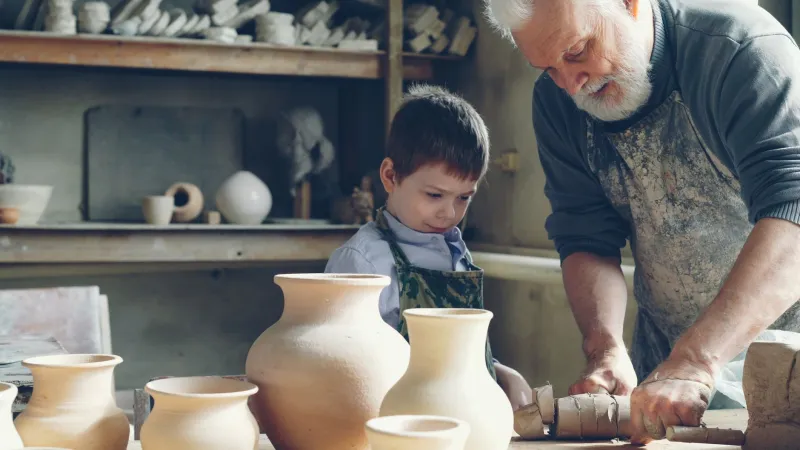
Traditional Japanese craft pedagogy operates on a fundamentally different premise. The student learns primarily through minarai—watching and absorbing—and through shugyō, a form of disciplined practice that prioritizes repetition and presence over explanation. The master does not narrate what the student should observe. The student is expected to observe everything, to ask very little, and to allow understanding to accumulate over time rather than to demand it on a schedule.
"I kept waiting for him to correct me," recalls a woodworker from Vermont who spent fourteen months in a joinery workshop in Gifu Prefecture before returning to the United States. "I would finish a joint and look up, and he would just be working on his own piece. I didn't know if what I'd done was acceptable or terrible. Eventually I realized that silence was the feedback. That if he had something urgent to say, he would say it. That otherwise, I was supposed to keep going."
For many Americans, this silence is the first major obstacle. It registers not as pedagogical restraint but as indifference or, worse, as withholding—a sense that the master possesses knowledge the student is being denied. The impulse to ask direct questions, to request explicit evaluation, is powerful and culturally conditioned. Acting on it, however, can fracture the relational dynamic the training depends upon.
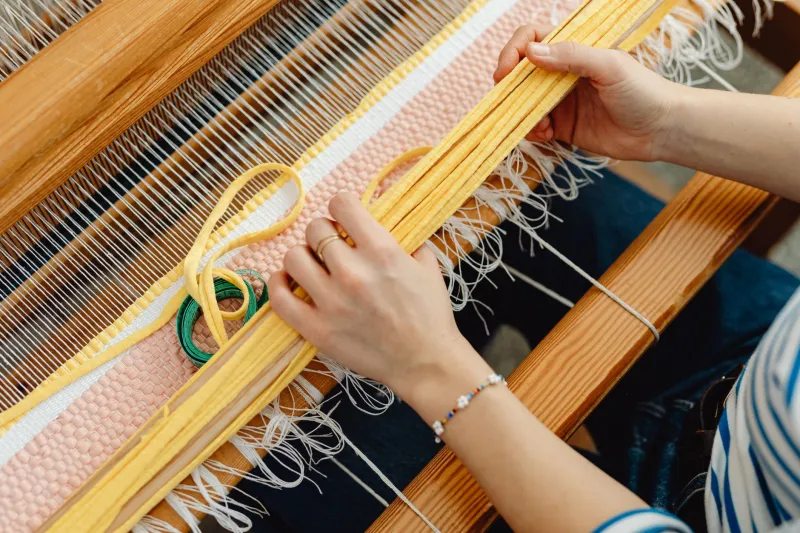
"My master told me, through an interpreter, that every time I asked 'Am I doing this right,' I was telling him I didn't trust the process," says a textile artist from Chicago who completed a three-year apprenticeship in Kyoto's Nishijin weaving district. "He wasn't wrong. I didn't trust the process. It took me almost a year to actually let go of that."
The Second Misunderstanding: What Progress Means
American conceptions of progress are, almost without exception, linear and incremental. Each day of practice should yield measurable improvement. Each month should produce a visible advance in skill. The student who cannot point to concrete evidence of development within a reasonable timeframe is likely to question whether the training is working—or whether they are.
Japanese craft mastery does not unfold on this timeline. The early months of a traditional apprenticeship are frequently occupied with tasks that bear no apparent relationship to the craft being studied: cleaning the studio, preparing materials, observing without participating, performing the same elementary exercise hundreds of times without variation. The Japanese concept of shokunin kishitsu—the artisan's spirit—holds that this foundational period is not preliminary to the real training. It is the real training. The discipline, attentiveness, and humility cultivated in those early months are the substrate on which genuine skill is eventually built.
For students who have crossed an ocean and restructured their lives to pursue craft mastery, the absence of visible progress can become psychologically corrosive. Several Americans interviewed for this account described a specific low point—typically occurring between the fourth and eighth month of training—when the gap between their expectations and their experience became difficult to sustain.
"I was sweeping the same floor I had swept every morning for five months," says a ceramicist from Portland who ultimately completed her apprenticeship. "And I remember thinking: I left my job for this. I left my apartment. I gave up two years of my life. And I am sweeping a floor." She pauses. "What I couldn't see yet was that the floor was teaching me something about attention. About doing one thing completely. I know that sounds like a cliché. But I watched myself sweep that floor, and I watched the way my master swept it on the days he did it himself, and eventually I understood there was a difference. And then I started to understand what the difference meant."
What the Masters Wish They Had Said
Several craft masters, speaking through interpreters or in careful English, expressed a version of the same regret when asked about students who had departed: not that the students lacked ability, but that they had arrived without sufficient preparation for the psychological dimensions of the training.
"The hands can be taught," says one lacquerware master in Wajima whose studio has hosted five American apprentices over the past decade, two of whom completed their training. "The mind is harder. Americans come with strong minds. Strong opinions about how things should go. That is not bad. But it must become quiet before it can become useful."
This sentiment was echoed by a swordsmith in Seki City who has worked with foreign apprentices for nearly two decades. "I wish I could tell each one at the beginning: the moment you feel most lost is usually the moment just before something opens. If you leave at that moment, you will never know what was waiting."
For those who persisted, that description resonates with precision. The breakthrough, when it arrives, is rarely dramatic. It presents itself as a subtle shift in perception—a new capacity to see what the hands are doing, to feel what the material requires, to inhabit the work rather than merely performing it. It cannot be scheduled or accelerated. It arrives when the conditions—internal as much as technical—are ready to receive it.
Before You Go
For Americans currently considering, or already navigating, a traditional Japanese craft apprenticeship, the practical wisdom distilled from these accounts is neither discouraging nor falsely reassuring. It is, above all, honest.
Arrive with your expectations loosened rather than abandoned. Silence is not rejection. Repetition is not stagnation. The absence of explicit praise does not indicate the absence of progress. Your master is not withholding knowledge from you; they are waiting for you to become capable of receiving it.
Learn enough Japanese to express basic courtesy and attentiveness, even if fluency is beyond reach. The effort signals something the work alone cannot: a willingness to inhabit the culture rather than observe it from a comfortable distance.
And when the floor-sweeping months arrive—and they will arrive—resist the impulse to measure them against what you imagined you would be doing by now. Measure them, instead, against the quality of attention you are bringing to the broom in your hands. That quality, more than any technical skill, is what the training is actually trying to build.