Leaving the Algorithm Behind: Why American Tech Professionals Are Trading Salaries for Japanese Craft Apprenticeships
In the spring of 2019, Marcus Hale submitted his resignation from a software engineering position at a mid-sized technology firm in Austin, Texas. His annual compensation package exceeded $140,000. His next role paid nothing. He had secured a place as an apprentice in a Kyoto lacquerware atelier, where his primary responsibility for the first six months was learning how to sand wood to a standard his master considered acceptable.
"The first day, I thought I understood sanding," Hale recalled during a recent conversation. "By the end of the first week, I understood that I had never understood anything."
Hale is not an anomaly. Across the United States, a small but statistically notable cohort of professionals — many of them in their late twenties and thirties, many holding advanced degrees, and a disproportionate number emerging from technology and design industries — are making the same counterintuitive leap. They are abandoning careers that most Americans would consider exceptional and entering apprenticeship systems that demand years of subordination, financial sacrifice, and deliberate slowness. Their destination, more often than not, is Japan.
The Shape of the Exodus
Precise figures are difficult to establish, given the informal and highly personal nature of apprenticeship arrangements. However, cultural exchange organizations and craft advocacy groups operating between the United States and Japan have noted a measurable uptick in inquiries from American professionals seeking placement with traditional masters over the past decade. The Japan Traditional Crafts Aoyama Square, a Tokyo-based organization that promotes over two hundred designated traditional craft categories, has observed increased international interest that its staff attributes in part to broader conversations about meaning, burnout, and the psychological costs of knowledge-economy work.
The profiles of those making this transition share certain patterns. Many describe reaching a professional plateau that felt, paradoxically, like emptiness. They had achieved what their environments defined as success — competitive salaries, titles, the respect of peers — and found that the achievement offered less sustenance than the pursuit had promised.
Dr. Yuki Tanaka, a cultural anthropologist at the University of California, Berkeley, who studies contemporary apprenticeship migration, frames the phenomenon in terms of what she calls "legibility hunger." "In technology work, the outputs are often invisible or abstract," she explained. "You ship a feature; it disappears into a platform. In craft, you make an object. You can hold it. Other people can hold it. The evidence of your labor is tangible and permanent. For a certain kind of person, that tangibility becomes psychologically urgent."
What the Workshop Teaches That the Office Cannot
Jennifer Cho spent seven years as a UX designer in San Francisco before relocating to Niigata Prefecture to study hand-dyeing techniques under a master specializing in tsutsugaki, a traditional freehand paste-resist textile art. She describes the early months of her apprenticeship as a sustained confrontation with her own assumptions about competence.
"In design, I had learned to project confidence," she said. "You present work, you defend decisions, you advocate for your vision. In the workshop, none of that mattered. What mattered was whether my hands could do what my master's hands could do. And for a very long time, they could not."
This enforced return to genuine incompetence — what learning theorists sometimes call the beginner's mind — is precisely what several former tech professionals cite as the most transformative aspect of their apprenticeships. The experience of not knowing, of being visibly and undeniably unskilled in a domain one has chosen, produces a kind of psychological recalibration that many describe as both painful and clarifying.
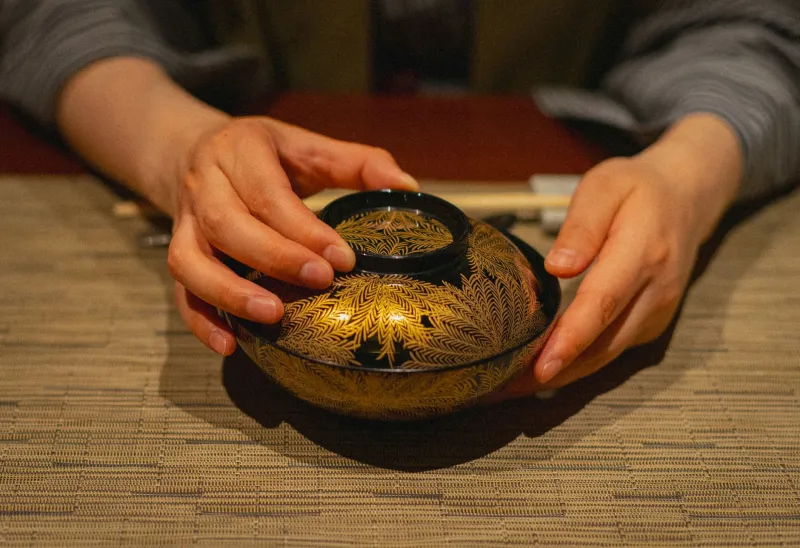
Daniel Ostrowski, a former product manager who now studies urushi lacquer application in Wajima, one of Japan's most celebrated lacquerware regions, described the shift in stark terms. "In my previous career, I had become very good at managing the appearance of competence. In Wajima, there is nowhere to hide. The lacquer either adheres properly or it does not. The surface either reflects light the way it should or it does not. The work is the truth."
The Economics of Meaning
The financial calculus of this choice is not lost on those who make it. Apprenticeship stipends, where they exist at all, rarely exceed modest subsistence levels. Housing is often arranged informally, sometimes within the master's household itself, a living arrangement that carries its own complex social dynamics. The period before a practitioner can command meaningful income from their craft may span a decade or longer.
And yet, when pressed to articulate regret, most of the practitioners who spoke with Kougeisai declined to offer it. Several acknowledged the privilege embedded in their ability to make such a choice — the educational backgrounds, the savings, the absence of dependents that made a voluntary reduction in income survivable. They are largely aware that their path is not universally available, and many express discomfort with any romanticization of financial sacrifice that ignores structural advantage.
What they describe instead is a quality of attention that their previous careers could not sustain. The craft workshop, they suggest, demands a form of presence that modern knowledge work actively discourages. When one is waiting for lacquer to cure at precisely the right humidity, or drawing a brush line that cannot be corrected once made, the mind has no viable alternative to the present moment.
"I used to check my phone forty, fifty times a day," Cho said. "In the workshop, I forget the phone exists. Not because I'm disciplined. Because the work requires everything I have."
Masters and the Question of Transmission
The Japanese masters who accept foreign apprentices are, by most accounts, a self-selected group: practitioners open to the possibility that their traditions might travel across cultural and linguistic boundaries without being diluted. Many are also pragmatic. In rural craft regions across Japan, the pipeline of young Japanese apprentices has thinned considerably as domestic youth migrate toward urban economic opportunities. A committed foreign student, however unconventional, may represent continuity where none otherwise exists.
Tanaka notes that this dynamic introduces its own tensions. "There is a genuine question about authenticity and cultural ownership that the craft community in Japan is actively debating," she said. "But there is also a recognition, among many masters, that a living tradition practiced imperfectly by someone who loves it is more vital than a perfect tradition that dies with its last practitioner."
Hale, now in his fifth year of lacquerware study, has begun producing work that his master permits him to sign. He sells pieces occasionally, through a small online presence, at prices that reflect years of labor. He does not describe himself as having solved anything. He describes himself as having, for the first time, found the right questions.
"Tech culture taught me to optimize," he said. "The workshop is teaching me to attend. Those are not the same thing. I'm not sure I understood that until I was very far from home."
For a cohort of Americans who arrived at professional success and found it quietly hollow, the workshops of Japan are offering something that no compensation package has yet managed to provide: the experience of caring, completely, about a single thing — and of that care, slowly and imperfectly, becoming skill.